Sunday, May 10, 2015

I Feel as David When Told of the Death of Absalom

Benjamin Helm
At 9:30 am on September 20, 1863, Confederate Brigadier General Benjamin Hardin Helm fell from his horse on the Chickamauga (Georgia) battlefield,  mortally wounded by a Union marksman's bullet to the chest. General Helm commanded the 1st Kentucky Brigade, which after the Civil War became known as The Orphans Brigade. Most people believe the post-war "Orphan" tag came from the painful loss of their beloved "father" figure, General Helm.

My son Boe and I were on the battlefields of Chickamauga last week, looking for--and finding--the precise locations where our maternal great-grandfather FTD Cherry and his brother, Cutler Cherry, were captured by the Union army. The helpful Federal Park Ranger told us he never before had met a family who had two family members captured at Chickamauga. During our day at Chickamauga we came across the moving story of General Helm.

Benjamin Helm graduated from West Point in 1851, just shy of his 20th birthday. He ranked 9th in his class of 42 cadets. He became a second lieutenant in the 2nd U.S. Dragoons (Cavalry) and then served as an instructor at the cavalry school in Carlisle, Pennsylvania. He served in the U.S. Army for a little over a year before he was diagnosed with inflammatory rheumatism and forced to resign his commission.

Helm then studied law at the University of Louisville and Harvard University, graduating in 1853. In 1855 he was elected to serve in the Kentucky House of Representatives  and then was later appointed Kentucky's state attorney. At the outbreak of the Civil War--in spite of his rheumatism--Helm was offered a commission with the Union army. Helm declined the appointment, and instead chose to serve as a field army officer in the Confederate States of America. He began his CSA army career as a colonel, but after two years of brilliant battlefield leadership, he was promoted to general and given charge of the 1st Kentucky Brigade. General Helm died at Chickamauga at the age of 32.


When President Lincoln received the news of General Helm's death, he went into an intense period of private grief. The Chief Justice of the Supreme Court who was present when Lincoln received the news of Helm's death, reported that the President proclaimed, "I feel as David of old when he was told of the death of Absalom."

General Helm was President Lincoln's brother-in-law.

It was President Lincoln who had offered Helm the position of postmaster for the Union army at the beginning of the Civil War, which Helm declined in order to serve in the Confederacy. Mary Todd Lincoln's niece would later recall the dilemma of the Lincoln's: "A single tear shed for a dead enemy would bring torrents of scorn and bitter abuse on both the President and Mary Todd Lincoln" - even if those Presidential tears were shed for family.

That's why the President and Mary Todd Lincoln grieved in private. The President granted his widowed sister-in-law, Emilie Todd Helm, safe passage to the White House to receive condolences from her family. CSA General Breckinridge informed Helm's widow by letter that her husband "commanded the men of the Orphan brigade like a thorough soldier. He loved them, they loved him, and he died at their head, a patriot and a hero."


Thursday, April 30, 2015

No Longer Slaves: Emmanuel Enid's Refuge Band

Last Sunday morning our Refuge Worship team sang a song entitled No Longer Slaves. During the second verse of that song the words are: "From my mother's womb You have chosen me. Love has called my name." Standing across the aisle from me was a young man whose first memories in life are being in an orphan's home run by Catholic nuns. He knows nothing of his earthly father; he knows nothing of his lineage or heritage before his mother's womb. I reached across and put my arm around him and said, "This song's about you." I could see in his eyes the encouragement No Longer Slaves gave to him. I hope it will you too. Here's a recording of that moment.

Friday, April 24, 2015

Yemen and American Ignorance of the Middle East

The other night I was listening to a national news broadcast when a reporter made a mistake in her reporting on  Yemen. She mentioned Iranian ships had been sent to the Persian Gulf and a possible confrontation with American ships was developing. "Iran," said the reporter, "sent the ships to support the rebels in Yemen, a hot-bed for Al-Qaida terrorism."

It was obvious the reporter believed Iran sent ships and troops to support al-Qaida in Yemen. Little did she know that Iran is about the only country in the Middle East, other than Syria, who is fighting al-Qaida. Al-Qaida is Sunni Muslim. Iran is Shia Muslim. Read previous my previous post for background in the differences between Sunni and Shia Muslims.

No terrorist group has killed more Americans than Sunni al-Qaida. They brought down the Twin Towers in New York. They've kidnapped, maimed, and killed more Americans around the world than any other terrorist group. Yet--now get this--some Sunni terrorists believe al-Qaida is too soft toward America. Americans know these harder-line Sunni terrorists as ISIS (Islamic State of Iraq and Syria); or IS (Islamic State); or--as President Obama prefers to call them--ISIL.

Now here is the important question Americans should be asking: Which country is most fiercely fighting America's enemies known as al-Qaida and ISIS in the Middle East?

Is it Saudi Arabia? The Gulf Arab states (Kuwait, Bahrain, Qatar, UAE, etc...)? Does our NATO ally Turkey lead out in the fight against ISIS? No. Not even close. In fact, all these  Sunni countries have aided ISIS in its attempt to pull down Assad's Shia government in Syria. Sunni-led Muslim countries in the Middle East have been dragging their feet in helping America fight al-Qaida and ISIS for years.

Yet there are some people (and countries) in the Middle East who are fighting ISIS toe-to-toe.

The rebels in Yemen are an example. They are the Shias and the press calls them Houthis. These rebels in Yemen successfully pulled down the Sunni government of Yemen on January 22, 2015 - just three months ago. The Shias of Yemen are sick and tired of ISIS brutality. ISIS blew up two of the most revered Shia mosques in Yemen, killing 135 Shia Muslims and wounding nearly 400 others. The Houthis are fighting ISIS. Iran was moving its ships to the Persian Gulf to support the Houthis in this fight. So, contrary to what the reporter was saying on national television, the Iranians were in the Persian Gulf to fight ISIS, not to support ISIS.

There are at least five other groups of people or countries fighting ISIS toe-to-toe as well - the Kurds of northern Iraq (who may soon become an independent country), Baghdad's Shia-led government, Iran, Syria, and Russia. But right now, the rebels in Yemen are in the middle of the biggest fight with ISIS.
What is happening in the country of Yemen illustrates American confusion and ignorance of the Middle East. In an outstanding article today by Pat Buchanan, he asks the question Why Is Yemen Our War? Buchannan points out that since the fall of Yemen to Houthi rebels on January 22, 2015, Saudi Arabia--with the aid of America--has attacked Yemen with 1,000 bombing missions. Read Buchannan's penetrating questions:
"What did the Houthis ever do to us? The Houthis' main enemy, AQAP (Al-Qaida in the Arabian Peninsula), is America's worst enemy. Why are we then making ourselves de facto allies of al-Qaida?
Excellent questions, Pat.

For a moment, jump forward several weeks or months in your imagination and think what it might be like in the Middle East if the Saudis defeat the Shia rebels in Yemen. What's next? According to reports from Saudi Arabia, the Saudis are ecstatic with the victories of the Saudi Air Force in Yemen. The Saudis may wish to help the ISIS rebels in Syria as well.

Ask the question how Iran, Iraq, and Russia might respond to a Saudi-led war to overthrow their long-time ally in Syria? Ask yourself what happens in Syria if Bashar Assad and his Shia government falls? Who comes to power?

ISIS.

The Middle East is messed up.

Monday, April 20, 2015

Shia Happens: Differences in Muslim Terrorism

Christians are routinely being beheaded in Lebanon by Sunni Muslim terrorists. President Obama is making a deal with the Shia Muslim government of Iran. Sunni Muslims are executing Shia Muslims in Africa. Sunni Muslim rebels are attacking the Shia Muslim government of President Assad in Syria. Egyptian Sunni Muslim terrorists (i.e. the Muslim Brotherhood) attack their own Sunni government in Egypt. Israel's Prime Minister Benjamin Netanyahu calls the Shia government of Iran "today's Nazis," and says the west is "comatose to the threat." Russia and China are aligning with Shia Iran and Shia Syria; the United States has historically aligned itself with Sunni Saudi Arabia and Sunni Egypt. Yet now, President Obama is making a treaty with Shia Iran over the objections of Israel. What's going on? How can you begin to understand current events without knowing the differences between Sunni and Shia Islam?

You can't.

Since the average American's attention span is shorter than most, I will summarize the five major differences between Sunni and Shia Islam, but urge those who wish to know more to read the article from the Council on Foreign Relations entitled The Sunni - Shia Divide.

Never forget this fact: To be a Muslim is a matter of faith, not ethnicity.

One can be born an Arab, or a Persian, or an African, or an American, or a Chinese - and become a Muslim, for Islam is a matter of faith, not race. A Muslim believes that "Islam is the only acceptable faith to God" and therefore, it will make the world a better place if everyone would "submit" to God and become a Muslim. Islam means "submission" in Arabic.

There are five pillars of the Islamic faith. After acquiescing to the first pillar (see below), one is deemed to be a Muslim convert.

Pillar One: Recite "There is no god but Allah, and Muhammad is His Prophet (or Messenger)." This statement is called the Shahada. Once you say this aloud--with conviction and understanding -- then you are declared to be a Muslim. 
Pillar Two: Pray "five times daily facing Mecca." This is the daily worship of a Muslim.
Pillar Three: Give 2.5% of your wealth ("alms") to the poor and needy.
Pillar Four: Fast during Ramadan, a religious festival that occurs during the ninth month of the Islamic calendar, a month which also goes by the name Ramadan. Since the Islamic calendar is lunar and eleven days shorter than the solar calendar - with no catch-up lunar months like in the Hebrew calendar - Ramadan migrates through the seasons (summer/fall/winter/spring) from year to year.
Pillar Five: Go to Mecca (Saudi Arabia), the birthplace of Islam, on a personal pilgrimage at some point in your life.

Worth remembering: Not all Muslims are terrorists. Terrorism is defined as "the use of violence and threats to intimidate or coerce, especially for political or religious purposes." An example of a Sunni Muslim leader who is not a terrorist is former army general and current Egyptian President Abdel Fattah al-Sisi. He recently called for a reformation within Islam to stamp out "violence and aggression." Sadly, our American President supported the Islamic Sunni terrorist group called the Muslim Brotherhood during the Arab spring of 2010 to 2012. Egyptian President Abdel Fattah ultimately executed the leaders of the Muslim Brotherhood for their violence against Egyptian Christians.

Also worth remembering: Muslims who are terrorists believe they represent the true Islamic faith. These 'radical, fundamentalists' of the Islam faith believe that when they "take the sword" and kill infidels, they are fulfilling the will of Allah and are obedient to the Quran. The Sunni and Shia Islamic terrorists who are killing, maiming, subjugating, and ritualistically beheading "idolaters and infidels" are fighting a religious war against encroaching western corruption.  Whether you believe "Islam is a peaceful religion" is not the issue; those who cut the throats of the idolaters and infidels believe they represent true Islam. For an Islamic fundamentalist terrorist his behavior is grounded in his faith.

Now to the important subject of being able to identify the differences between Muslims who identify themselves as Shias and those who identify themselves as Sunnis.

The FIVE MAJOR DIFFERENCES Between Shia and Sunni Muslims

(1). LEADERSHIP - Sunni and Shiite terrorists differ on who should have succeeded Muhammad after his death in 632 AD and who should lead them now. 

After Muhammad died, some of his followers--later known as Sunnis--elected Abu Bakr to lead them. The Arabic word Sunni means "people of the tradition." Sunnis believe that Islamic leaders should be elected by the popular vote of the people because only the traditions of the Quaran and the prophets are important, not the leaders themselves. .

However, some followers of Muhammad immediately objected to the election of Abu Bakr, believing that Islam should only have leaders (i.e. Prophets) who directly descend from the great prophet Muhammad himself. These followers -- later called Shias - followed the son-in-law of Muhammad, Ali ibn Abi Talib, and Ali's sons (that's why most Muslims named "Ali" are Shia Muslims). Shia is the Arabic word which means "follower."  Most Shia Muslims believe that the 12th Prophet after Muhammad went into hiding in 939 AD,  but will ultimately return at what they call "The Second Coming" when he will restore peace to a chaotic and destructive world. Until then, all authority and power has been invested in "ayatollahs" who are the chief clerics of true Islam (think Ayatollah Khomeini of Iran).

Sunnis and Shias historically lived together and intermarried. However, the friction and divide between Sunnis and Shias has escalated violence toward one another. A similar comparison would be the Catholic/Protestant wars in Ireland during the 1980's and 1990's.  The newly declared Islamic State (IS or ISIS) is a Sunni group and its stated goals are to create a territory run by a caliph and sharia, or Islamic law. Shias do not believe that a true Islamic state or caliph can be created without a Prophet or ayatollah. So Shias reject ISIS. In return, ISIS warriors are rounding up and killing Shia Muslims in ISIS held territory.

(2). NUMBERS - There are 1.6 billion Muslims in the world. 85 percent (1.3 billion) of these Muslims are Sunni.

Only 250 million Muslims are Shia. The identity of Shia Muslims is rooted in victimization by the majority Sunnis. Only two countries--Iran and Iraq--have a majority Muslim population that is Shia. Though Syria is a majority-Sunni country, the regime of President Assad is a close ally of Shiite-dominated Iran. And though Iraq is majority Shia (also called Shiite) the northern portion of Iraq has a lot of Sunnis. The Islamic State of Iraq and Syria (ISIS) has made increasing inroads into Shia-dominated Iraq. Neighboring Iran is majority Shiite, while next-door Saudi Arabia is majority Sunni. Yemen, Bahrain, Afghanistan, Pakistan and Lebanon have significant Shiite minorities, but are majority Sunni. Turkey is a majority Sunni country.

Sunni Muslim radio and television broadcasters in Arabic countries area now claiming President Obama's family of origin is Shia Muslim and this explains his empathy toward Iran.

(3). TERRORISM - Sunni terrorists will fight their own governments. Since Sunnis believe in "elected leadership," they are always seeking the most qualified candidates to lead Muslims in the one true faith. If these radical Sunnis believe current government leaders are "unfaithful to the Prophet or the Quran" they will revolt from within. This is what happened in Egypt when the Sunni Muslim Brotherhood attacked the Sunni government in 2012, and it is what happened throughout the Arab spring in other Sunni-led countries. It's also why Sunni-led governments (like Egypt and Saudi Arabia) will fight against Sunni-led terrorism (like ISIS). ISIS wishes to disband all state governments and coalesce around a pure, Sharia-law state where Islam is practiced with purity and without the taint of western influence.

On the other hand, Shia terrorists are typically government sponsored. For example, Shia Hezbollah-- the terrorist group stationed in southern Lebanon that has historically attacked Israel--is supported by Iran and Syria, two of the three governments led by Shia Muslims (the other government being Iraq). This is the reason why Israeli Prime Minister is so vocal against Iran. Iran sponsors state-run terrorism. Israel believes Iran is ever expanding its influence and power in the Middle East, and is now pulling Iraq into its sphere of influence, supporting Syria in its war against Sunni rebels, and is now trading oil with China and Russia. Israel believes Iran is the greater terrorist threat.

However, now that Sunni ISIS is taking territory for itself in a bid for power--all the while beheading Christians and Shias, enslaving women and girls as sexual property of ISIS warriors, and recruiting Sunni Muslims from all over the world in its bid for a Muslim Caliphate that rules the world--one wonders if the pendulum has swung and the greater threat in this world is Sunni terrorism?

It could be argued that the Muslim Middle East is about to explode in war with Shia-led Iran (backed by China and Russia) go to war against Sunni-led Saudi Arabia, Turkey and Egypt. Speaking as a pro-Israel supporter, I'm not nearly as convinced that Iran is the greater threat to western civilization as is the Sunni-led terrorism of ISIS, and I realize this opinion is in opposition to Israel Prime Minister's views.

(4). PRACTICE - As radical Sunnis (ISIS) target and kill Shia (or Shiite) Muslims, the question must be asked "How can anyone tell the difference between a Shia and a Sunni?" Remember, there's nothing ethnic about being a Sunni or a Shia. It's a matter of faith. The answer to how to tell the difference between a Shia and Sunni in practice is four-fold: (a). Ask for their name. As mentioned earlier, Shias have names such as Ali (or Hussein, Assan, or Abbas). Cassius Clay changed his name to Muhammad Ali (b). Ask how they pray. Sunnis fold their hands or cross their arms on their stomachs while praying. Shias are taught to pray with palms resting up on their thighs. (c). Ask what music they enjoy. Just as Catholics and Protestants sing different songs, Shias and Sunnis sing and enjoy different music. (d). Ask where they live. Due to growing animosity, in Muslim countries, Shias live in enclaves (neighborhoods) where they can worship, shop, and work together. Similar to the divisions that occurred in Ireland during the Protestant/Catholic wars of the late 20th century.

(5). OTHER TRADITIONS - Shia Muslims feel animosity towards some of the companions of the Prophet Muhammad, based on their positions and actions during the early years of discord about leadership in the community. Many of these companions (Abu Bakr, Umar ibn Al Khattab, Aisha, etc.) have narrated traditions about the Prophet's life and spiritual practice that Sunnis regard as 'holy writings.' Shia Muslims reject these traditions (called the hadith) and do not base any of their religious practices on the testimony of these individuals. This naturally gives rise to some differences in religious traditions between the two groups which touch on all aspects of Islamic traditions, including prayer, fasting, pilgrimage, etc...

These are the fundamental differences between Shia Muslims and Sunni Muslims. The only way Sunni-led ISIS or Shia-led Iran will ever be stopped in their aggressive grab of land, power and people is for people to recognize that this is a religious war, and its not east versus west, but east versus east and the west better think long and hard before choosing a side.

Monday, April 13, 2015

Patriots' Day, April 19, and the Need for Caution

The difference between treason and patriotism is only a matter of dates.
Alexander Dumas, The Count of Monte Christo.
 
 
This Sunday, April 19, 2015, is the 20th anniversary of the bombing of the Alfred P. Murrah Federal Building in Oklahoma City. At 9:03 am that morning, a two-ton fertilizer bomb loaded in the back of a Ryder truck parked in front of the Murrah building exploded, killing 168 people and injuring nearly 700 others.  The blast destroyed or damaged 324 buildings within a 16-block radius, destroyed or burned 86 cars, and shattered glass in 258 nearby buildings, causing three-quarters of a billion dollars in damage. The Murrah bombing was the deadliest and most costly terrorism act in the history of the United States, only surpassed by the 9/11 New York World Trade Center bombing.
 
Timothy McVeigh (April 23, 1968 – June 11, 2001) was charged and convicted with the bombing. The United States federal government executed McVeigh for his crime. In the book American Terrorist, the only biography of his life that McVeigh authorized, authors Lew Michel and Dan Herbeck spent 75 hours interview McVeigh in prison. The portrait they paint of the 26-year-old who bombed the Murrah building--according to Salon Magazine--might fit any number of right-wing radicals today.
"He hates and fears the federal government, worships guns, fetishizes "liberty" (defined in almost purely negative terms, as freedom from external interference of any kind), embraces survivalism and sees himself as having acted in a proud American tradition of resistance to tyranny that goes back to the Founders. Throw in belief in the gold standard, certainty that a U.N.-run "New World Order" is poised to take over the world, racial resentment and an obsessive fixation on Ruby Ridge and Waco as proof that federal agents are jackbooted thugs waiting to make their final move, and the ... portrait is complete" Gary Kimaya, Salon
April 19 is Patriots' Day.

McVeigh's choice of that day to bomb the federal building is no accident. Patriots' Day
commemorates the date of the 1775 Battles of Lexington and Concord which featured "the shot heard round the world" and the beginning of the American Revolution. Patriots' Day is also the date in which first bloodshed of the American Civil War occurred, in the Baltimore riot of 1861, When Patriots' Day was established in 1894, Massachusetts Governor Frederic Greenhalge proclaimed it as "the anniversary of the birth of liberty and union."  The original date of April 19 for Patriots' Day was eventually switched to 'the third Monday of April" to prevent celebrating the holiday on different days of the year. The Boston Marathon has been run on Patriots' Day ever since April 19, 1897, but moved to Marathon Monday when celebrating Patriots' Day was moved to the third Monday of April. Of course, Marathon is the infamous name of the battle in 490 BC when the Greeks defeated Persia and marked the beginning of western civilization and its emphasis on individual liberty and political democracy.

It seems the date April 19 is rapidly becoming the date of choice to attack the United States government, more so than even September 11. Anyone with hostility toward the US government-- including right-wing terrorist groups, IS terror cells, and others who would desire to see the United States government collapse, will choose April 19 or Patriots' Day as their preferential date to attack.

McVeigh chose the federal building in OKC in retaliation for the federal law enforcements' attack and destruction of the Branch Davidian compound in Waco, Texas on April 19, 1993. The Murrah Building housed the Bureau of Alcohol, Tobacco, Firearms and Explosives (ATF), the Federal Bureau of Investigation (FBI), or the Drug Enforcement Administration (DEA), three of the agencies that attacked the Davidian Compound in Waco on April 19, 1993. McVeigh regarded the presence of additional law-enforcement agencies at the Murrah Building, such as the Secret Service or the U.S. Marshals Service, as a bonus.

I worked the morgue after the Murrah Bombing and became one of the liaisons between family members gathering at a Christian church north of the bombing, waiting for word about their family members. I will never forget the devastating impact of April 19, 1995 on Oklahoma City and the state of Oklahoma.As we reflect on the 20th anniversary of the bombing, it's a good time for all of us who love the United States to recognize those who hate our country/government care little for the collateral damage they cause through their attacks. This week and next week are both a time for all Americans to be familiar with their surroundings, just as we are on September 11 every year.

Wednesday, April 08, 2015

God Doesn't Always Do What I Ask, But He's Already Done Far More Than I'll Ever Grasp

There are few things more gut-wrenching than losing a child to death because of illness or accident. A comparable pain might be the sudden death or unexpected critical illness of a spouse. Losing a parent to death--regardless of age--also brings to us a great deal of emotional trauma.

Precisely because the loss of a loved one is so painful, many turn to God when they begin to "walk through the valley of the shadow of death." Even people unaccustomed to prayer often ask God to heal their loved ones. In some cases, prayer chains are started, all doubt is cast out, and by faith, people claim and believe that God is going to heal those they love.

And yet death still comes.

Often the greater pain becomes my disappointment with God. The hardest question is always "Why?" Why does God not do what I ask? Why does God not answer my heartfelt please and prayers?

There seems to be some encouragement for those of us who ask the "Why" questions from a story in Luke 7:11-15 that involves a widow, her dead son, and Jesus.
Soon afterwards He went to a city called Nain; and His disciples were going along with Him, accompanied by a large crowd. Now as He approached the gate of the city, a dead man was being carried out, the only son of his mother, and she was a widow; and a sizeable crowd from the city was with her. When the Lord saw her, He felt compassion for her, and said to her, "Do not weep.” And He came up and touched the coffin; and the bearers came to a halt. And He said, “Young man, I say to you, arise!” The dead man sat up and began to speak. And Jesus gave him back to his mother.
You might be thinking, "But I thought this text was supposed to encourage me when God doesn't do what I ask? It looks to me God did precisely what the widow desired--He healed her son. How is that a help to us for whom God doesn't respond with a miracle?"

Let me see if I can't show you something pretty incredible (in my opinion) about the widow from Nain and the resurrection of her only son.

The Parallelism with Christ's Death 

Jesus Christ raised three people from the dead during His earthly ministry--this son of the widow from Nain; the daughter of Jairus; and Lazarus. This resurrection of the widow's son was the first resurrection miracle Jesus performed. On many fronts, this miracle of the resurrected widow's son pictures and parallels God's compassion for us through the death and resurrection of Jesus Christ.

(1). He was an only son. The Greek phrased used to describe this widow's son -- ὁ μονογενὴς υἱός literally "only begotten son"- is the same phrase used of Jesus in John 3:16. It is used only one other time in the New Testament, describing Abraham's son Isaac in Hebrews 11:17 when Abraham offered his "only begotten son" on the altar - a clear type of God the Father offering His Son as a sacrifice for us.

(2). He was outside the gate.  Both the widow's son and Jesus Christ are dead 'outside the gate' of the city (Hebrews 13:12). The Hebrew Day of Atonement called for two goats to be 'offered' during the ritual; one goat for a blood offering and the other as the scapegoat offering. Israel’s sins were laid upon the scape goat and expelled from the camp; the blood offering goat was sacrificed, the blood offered, and the body burned "outside the gate." (Leviticus 16:20-22).

(3). He was raised for others. There are two dead people in this Luke 7:11-15 story; the boy and his widowed mother. The boy was physically dead. The mother was emotionally and spiritually dead. Notice that Jesus 'felt compassion for her' (v. 13).  Jesus raised the dead son for the sake of his mother. So, too, God the Father gave us His only begotten Son for the sake of others. "God so loved us" (John 3:16). The Apostle Paul described it this way: "God demonstrates his own love for us in this: While we were still sinners, Christ died for us" (Romans 5:8).

(4). He was offered with a command. When Jesus raised the boy from the dead by the word of His power, He gave him back to his mother with this command (to the mother) - "Do not weep."  This word 'weep' means more than tears; its speaks of mourning, lamenting, despairing, and giving up. Why should the mother not weep? This is the key: "Jesus gave him to his mother."  To follow through fully with the type: "Do not mourn, God has raised His Son from the dead and given Him to us!"

Principle:
The only anecdote against despair during a trying time--including those occasions when our prayers seemingly go unanswered --is the growing comprehension of what God has already done for us in giving to us His resurrected Son.

"What then shall we say to these things? If God is for us, who is against us? He who did not spare His own Son, but delivered Him over for us all, how will He not also with Him freely give us all things? But in everything we overwhelmingly conquer through Him who loved us.  For I am convinced that neither death, nor life, nor angels, nor principalities, nor things present, nor things to come, nor powers, nor height, nor depth, nor any other created thing, will be able to separate us from the love of God which is in Christ Jesus our Lord" (Romans 8:31-32; 37-39).

"But God, begin rich in mercy, because of His great love with which He loved us - even when we were dead in trespasses and sins ... raised us up with His Son and seated us with Him in heavenly places, so that in the ages to come He might show us the surpasses riches of His grace in His kindness toward us." (Ephesians 2:4-7).

Application
(A) The greatest riches in my life are vertical, not horizontal. When I receive, comprehend, and enjoy the love of God for me in Christ Jesus, I no longer need or depend on the love of people in this life. So, even if those I love are gone (or turn against me) I rest in the love of Him who loves me eternally.
(B). To the degree I lack comprehension of the riches of God's kindness, favor, and love for me in Christ Jesus I will be tempted to measure God's love, favor and kindness for me by whether or not God always answers my prayers the way I ask rather than rejoicing in what He has already done for me.

Action
I will spend more time learning about the love of God for me in what He has already done for me through His Son than I will worrying about what God will do for me in the future through meeting a temporal need I have.

Conclusion:
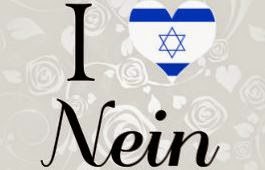
Nain is a city in Israel that still exists. It's just to the southwest of Mt. Tabor in the Galilee region of Israel. The modernized spelling of Nain has switched to Nein. I've been there a few times in my trips to Israel, and I never pass through without thinking of "the widow of Nain" and what her story declares about God's compassion and love for me in giving me His Son.

Nein in German means "No.'

If I am praying for God to do something miraculous in my life, but the circumstances play out in such a way that God seems to say "Nein" to my request, I want to remember the widow of "Nein" and learn to "weep not" because God has already given to me His Son. If indeed, I am able by God's grace to remember this principle, I will be able to say with all the saints...

 "I love Nein"

Sunday, March 29, 2015

What You Believe Does Dictate How You Behave: Old Covenant Theology vs. New Covenant Theology

I've often said the greatest - and most overlooked - evangelical theologians of the past two millenniums were early 18th century English Baptists who penned the First London Confession of Faith. It's not my purpose in this blog post to go into all the details as to why this is so, suffice to say I am follower of Jesus Christ affiliated with a Baptist Church because of my agreement with these preeminent theologians. In short, they (and I) believe the New Testament to be the apex of God's self-revelation because in them is revealed how "the righteousness of God is given through faith in Jesus Christ to all who believe" (Romans 3:22).

My wife and I recently enjoyed some fellowship with a woman in her seventies. She was raised Dutch Reformed and is now active in the Presbyterian Church of America. She is a delightful lady, one with whom we enjoyed visiting. However, through the course of our conversation there arose a stark and pointed difference between what she believes as a Presbyterian and what we believe as Baptists. She is a "Law person," and emphasized over and over that "God blesses obedience."

Of course, nobody would disagree with this statement. God does bless obedience. The question is "Whose obedience?" Our Presbyterian friend seemed to be emphasizing her and her husband's personal obedience. My wife and I only emphasize Christ's obedience (i.e. "His fulfillment of the Law"), and God's blessings freely given to us because of our faith in Christ. 

This is the fundamental difference between Old Covenant Christians and New Covenant Christians.

Baptists historically have been New Covenant Christians. The early 18th century Baptists were uninterested in turning sinners into Mosaic Law-keepers and solely concerned with turning sinners into Christ believers. When Jesus Christ told us He came to fulfill the Law and the prophets, He meant it (Matthew 5:17). He fulfilled the Law with His life, death and resurrection, and then He abolished it and became a new Law Giver for His people. He said:
"A new commandment I give to you, that you love one another, even as I have loved you, that you also love one another. By this all men will know that you are My disciples, if you have love for one another" (John 13:34-35).
Some might wonder about the practical differences between an Old Covenant believer as compared to the  New Covenant believer. One of the best illustrations of the differences between the behavior of Old Covenant Christians when compared to the behavior of New Covenant Christians is given by my friend Jon Zens.

Jon points out that the Puritans (Old Covenant Christians) came over to the New World and found themselves facing the Native Americans (Indians). Old Covenant typology dominated their behavior toward the Indians. The Puritans saw their exodus from England paralleling Israel's exodus from Egypt in the Old Testament. The Puritans viewed their crossing of the Atlantic as a parallel to Israel's crossing of the Red Sea. The Puritans believed that their arrival in the New World paralleled Israel's arrival and entrance into the land of Canaan. The Puritans hoped that the New World would indeed be a land "flowing with milk and honey."

But now came the mistake the Puritans made because of their emphasis on the Old Covenant.

The Puritans believed that the Native Americans they met in the New World paralleled Israel meeting the heathen nations in the land of Canaan. How should they respond?  Old Covenant typology pointed to casting out the Native peoples by force, precisely as Israel cast out the heathen nations in Canaan.  However, New Covenant theology commands believers in Christ to love their enemies. Should the Puritans follow the Law of Christ by loving and evangelizing the Indians, or should the Puritans follow the example of Old Covenant Israel and kill the native dwellers?  According to Zens, the Puritans behaved in a manner consistent with their Old Covenant beliefs. Over time they removed or exterminated the Indians, claiming the New World for God.

Now, back to the Presbyterian lady we met. Her husband was not a believer. She had been married to him for over fifty years, but it had been "exceedingly difficult." She so desperately wanted her husband to be 'obedient' to God's Laws (worshipping on the Sabbath, tithing on their income, etc...) because "God blesses our obedience." I was worn out listening to her.

I would suggest that what her husband needed was a wife who was so full of Christ, so appreciative of the perfect righteousness that has been given to her because of her faith in Jesus, that she loves her husband exactly the way Christ loves her. It seems to me that if the New Covenant was the foundation of her theology and philosophy of living, then she would set aside any emphasis on her husband's performance--or lack thereof -- and simply love him without expectations or conditions.

Obviously, this post has simplified some very complex issues, but my goal is not so much to convince anyone of this truth as much as it is to encourage the beginning of a journey toward truth. It's an axiom that if there is maladjustment in one's behavior toward people, it's usually because of a problem in one's beliefs about God.

We need more New Covenant theology preaching in our churches so that our behavior as believers toward others will match our beliefs of God's behavior toward us in Christ - as taught in the apex of God's self-revelation, otherwise known as the New Testament.


Sunday, March 22, 2015

Never Too Old To Learn: Nola Osch

After worship today Rachelle and I shared a meal with Lt. Col. Paul "Slew" Vicars, his wife Marti, and their three boys (Levi, Cash and Knox). One of the advantages of ministering at Emmanuel Enid is the privilege of getting acquainted with interesting people like the Vicars. Paul is the commander responsible for training future Air Force fighter pilots at Vance Air Force Base, a former F-16 fighter pilot himself, and an intellectual with a passion for history. It's my privilege to serve as an honorary commander at Vance this year, and it is with Lt. Col. Vicars and his fighter training squadron to whom I'm attached.

During our lunch conversation today I learned something interesting about Marti Vicars. It seems her paternal grandmother, Nola Ochs (pictured left), is in the Guinness World Record book for being the world's oldest college graduate. Nola is 103 years old, born November 22, 1911. She received her bachelor's degree from Fort Hays State in Hayes, Kansas eight years ago, when she was 95. Nola went on to obtain her master's degree at age 98, graduating in 2010. After graduating with her master's in history, Nola went to work for Princess Cruise Lines as a guest lecturer.  When Nola turned 100 years of age in 2011, she was employed as a graduate teaching assistant at Fort Hayes State.
Marti told us that her grandmother raised her four sons - including Marti's father - on the family farm. She had attended college in her younger years, but after marrying her husband (Vernon Osch), Nola focused the family on the farm. After the death of her husband, realizing she was only 30 hours short of a degree, she moved 100 miles from the family farm to Hayes, Kansas to obtain her degrees.

Nola still travels. She still lives alone. When she travels friends will drop her off at the airport and she will fly solo. She's flew to Los Angeles for the Jay Leno Show where she was a featured guest along with Simon Cowell and Maroon 5. Nola's been on several major national television shows, but she keeps a humble spirit about her. When asked about her educational achievements, Nola's typical response is, "I've led a long, interesting life. We went through the dust storms. We had some difficult times in our marriage, financially. But it's been the Lord's will that I've lived this long life, and I thank Him kindly for it."

A tip of the hat today to a new hero of mine - Nola Osch. She proves to all of us that one is never too old to learn.

Friday, March 13, 2015

Brevity, Clarity, Profundity: Speech that Sizzles


Last night I sat through a worship service where the the preacher spoke for an hour and ten minutes. About fifty minutes into the message, my mind began to wonder about the optimum time for the spoken word. 

When you type a text message you must limit your communication to 160 characters before the text is split into two separate texts. A seventy-five-year-old German communications specialist named Friedhelm Hillebrand is the reason for this 160 character limit. Before texting was introduced as a cellular phone feature in 1985, Mr. Hillebrand and his research team created the industry standard for character limits per text based on the conclusions they reached during their research of emails and old-fashioned postcards.

Mr. Hillebrand's team discovered "most emails can be understood by reading the summary line." It is the summary line that readers recall. Rarely does the body of the email add to what is remembered about the email. In addition, Hillenbrand's research team observed that the best postcards were written in under 150 alphabetic characters. Clarity and profundity of the written word seemed proportional to brevity. To Hillenbrand's team, less written characters often translated into more emotional impact.

Because Hillenbrand's team set the industry wide cellular text character limit at 160,  Twitter creators (who were in preschool when texting was invented) were forced to limit individual tweets to 140 characters or less in order to keep individual tweets within the limits of a cellular text. The remaining 20 characters had to be used for the user's unique Twitter address. Written communication is forcibly brief in our cellular age, but there was scholarly intention and design behind this brevity.

But what about the spoken word? How long is optimum?

I am a huge fan of Ted Talks. There is an 18-minute rule for these wildly popular lectures. Regardless of the person's power or prestige, he or she has eighteen minutes to get the point across. From Bill Gates to the unknown housewife, it's eighteen minutes per talk. No exceptions.

The founder of Ted Talks gives us the reason for the eighteen minute rule for the spoken word
"It [18 minutes] is long enough to be serious and short enough to hold people’s attention. It turns out that this length also works incredibly well online. It’s the length of a coffee break. So, you watch a great talk, and forward the link to two or three people. It can go viral, very easily. The 18-minute length also works much like the way Twitter forces people to be disciplined in what they write. By forcing speakers who are used to going on for 45 minutes to bring it down to 18, you get them to really think about what they want to say. What is the key point they want to communicate? It has a clarifying effect. It brings discipline."
It has a clarifying effect. It brings discipline.

I agree with him. Though I'm a fan of John Gill, Jonathan Edwards, and other 18th century preachers who spoke for an hour or more, and though I understand there are cultural factors when it comes to an optimum length of time when one speaks before an audience, I know that Jesus taught with brevity, clarity and profundity, but He lived long before texts, Twitter and Ted Talks.

As the hour and ten minute message came to a close last night,  I began to ask myself a few questions:

(1). When I go longer than 20 is it sign that I am less focus and prepared?
(2). Is a lengthy message characteristic of an undisciplined messenger?
(3). How much of what I say is designed to draw attention toward me and away from the message?

I realize there is no 'hard and fast' rule on this issue. If you are a professor at a university (as is my wife), and lectures are often two to three hours, the length is understandable. The impartation of knowledge is your goal.

We who preach have the goal of seeing lives transformed.

I'm wondering if we preachers aren't better served with more focus, greater discipline, and a tight timeline for reaching an audience in need of change.

Wednesday, March 11, 2015

Oklahoma University and Inconsistent Intolerance

David Boren, President of Oklahoma University, has expelled two students for their involvement in a SAE fraternity racist video posted to YouTube. Both students have since apologized, but the decision to expel them stands firm.

The SAE house mother, an elderly white lady named Beuton Gilbow, a woman the fraternity brothers affectionately called "Mom B," lost her job and the place she has lived for the past 15 years when Oklahoma University shut down the SAE house as punishment. People began raising money for Mom B in a GoFundMe account until a new video was discovered of Mom B chanting the "n" word herself. After the video of Mom B's singing her song was discovered by OU's student newspaper, the account to raise funds for Mom B was closed.

79-year-old Mom B. was loved by everyone at SAE, including the African-American SAE members. Her late husband was Coach Barry Switzer's college roommate at Arkansas. There's not a racist bone in Mom B's body. Everyone who knows her will tell you this, including Coach Switzer himself.  Of course, those who know Barry Switzer recognize that this man's relationship with African-American college athletes is one of friend, father and mentor. Coach Switzer's relates in his autobiography how being a son of an Arkansas bootlegger created within him a love for poor, disenfranchised and minority athletes.

I believe Oklahoma University has every right to expel the two boys and shut down the SAE house for those foolish video rants that use the "n" word. Unlike some of my libertarian friends who argue that Oklahoma University has surrendered the inviolable principles of personal liberty and free speech, I take the position that any school has every right to establish and enforce university standards of behavior through its "code of conduct." As Dr. David Boren said when punishing those involved with singing the racist song:
"I have a message for those who have misused their freedom of speech in this way. My message to them is: You're disgraceful. You have violated every principle that this university stands for."
Now, I have a couple of questions for Dr. Boren and other Oklahoma University administrators. According to Mom B, when she was filmed chanting the "n" word, she was actually singing along to the Trinidad James' song "All Gold Everything." The song was playing in the SAE frat house (you can hear it in the video). As an option to not listening to the filthy lyrics of "All Gold Everything", you might consider just reading them (caution: extremely explicit).


(1). Does this video "violate every principle that this university stands for"?
(2). If so, will you expel any student who sings the lyrics or plays this song in their car (or bus)?
 
If there is a code of conduct for the University of Oklahoma, and there is, and if there is going to be an enforcement of punishment for violations of that code of conduct--and this week seems to indicate there will be--then there should be an intolerance for the singing, promotion, and playing of any song which "violates the principles for which the university stands for."
 
There must be either the advocacy of full liberty and freedom of speech on a university campus, or the consistent enforcement of the university's code of conduct on the basis of principle. Anything less will cause a university or government to begin its gradual descent into tyranny.