Yesterday I was taken by surprise when a couple of reporters called and asked me my opinion of The New Baptist Covenant and the Atlanta Celebration of a New Baptist Covenant scheduled for late January 2008.
I did a little research on the subject and only after learning the stated purposes of this union of Baptists included avoiding all politics and partisianship, and to unite together Baptists in order to address pressing social and cultural concerns through prophetic means (or, as I would say 'the gospel'), I issued an official comment (see below) to the reporters.
Since yesterday I have read some responses from Southern Baptists that contain more than a little cynicism about the New Baptist Covenant. Some have gone back to the old war flag of 'defeat the liberals,' and a few are seeking to repudiate this effort due to the character, or lack thereof, of some of the organizers.
Just a few thoughts before I post my public response to the Baptist Covenant.
(1). A child in Africa in need of a tetanus shot doesn't care about convention politics, he just needs a shot. A young girl trafficked in the sex trade does not care about the political bent of her rescuer, she just needs rescued. A tribe in need of a shipment of grain does not care from which Baptist convention the shipment came. A continent in need of an HIV solution does not even know the difference between Baptist conventions, nor does it care. A world in need of the gospel of Jesus Christ is helped when all evangelicals unite to do justice and love mercy, or at the least refuse to denigrate others' efforts.
(2). If we as a convention choose not to participate with this new union of Baptists -- so be it. But I believe it would be far better for the kingdom at large for us to wish them success in their venture, encourage them publicly, and pray from them privately. It makes no sense to me to ridicule people who are attempting to do some good things for the world at large. If Jesus was silent before his accusers who hated him, then good grief, maybe we could learn to be silent about our brothers in Christ who are different from us, but like us, desire to live out the gospel.
(3). If support of a gospel enterprise, or a non-profit ministry, or a union of evangelical people depends upon the unsullied character of her leaders, then we are all in trouble. Martin Luther once made the statement, "A truly Christian work is it that we descend and get mixed up in the mire of the sinner as deeply as he sticks there himself, taking his sin upon ourselves and floundering out of it with him, not acting otherwise than as if his sin were our own. We should rebuke and deal with him in earnest; yet we are not to despise but sincerely to love him. If you are proud toward the sinner and despise him, you are utterly damned."
With those thoughts in mind, here is the response I drafted:
"I am not familiar with 'The Baptist Covenant,' nor am I acquainted with the leaders of the 2008 convocation in Atlanta. However, it would be difficult for me to criticize any evangelical Christian movement whose stated goals are to live out the gospel through doing justice and loving mercy. There comes a time when we as Southern Baptists should simply remain silent if we cannot say anything supportive of other Baptist attempts at addressing pressing social and cultural issues in a prophetic manner. To provide a public defense of our convention's record, while at the same time criticizing others, seems to be acting in a manner contrary to the spirit of our Lord and the good of His kingdom at large. I wish nothing but success for all Baptists who seek to live out the gospel for a world in need of a Savior.
An ice storm is headed for Enid, so I thought I would get this up before the power went out!
Have a great weekend!
Wade Burleson
Friday, January 12, 2007

Thursday, January 11, 2007
What I Believed Then and Still Do - Message 5
__________________________________________
What I Wish I Had Known Forty Years Ago
What I Believed Then and Still Do
Listen to the concluding message of the five part series by Paul Burleson here
.Wednesday, January 10, 2007
I Know Whose Truth It Is - Message 4
Listen to I Know Whose Truth It Is.
This message is the fourth in a five part series entitled "What I Wish I Had Known Forty Years Ago." This series was preached at Emmanuel Baptist Church, Enid, Oklahoma, January 7-10, 2007, by guest speaker Paul Burleson. The outline below is given for your enjoyment.
Sunday morning I said I knew forty years ago what brought unity - "If you agreed with my truth!"
I lived according to the principle "My way or the highway.” I might have called you a brother, but if you disagreed, I moved away from you.
First, a couple of background thoughts before we examine what it means to "Endeavor to keep the unity of the Spirit." (Ephesians 4:3).
1. Forty years ago I had a scriptural problem.
I didn't realize that there were two moods in Greek language predominately used in Paul's writings, and to properly understand Ephesians 4:3 I had to understand the proper moods of the grammar Paul used.
…
There is the indicative mood – It is language that points to what God has done/accomplished.
There is the imperative mood – It is language that points to what we are to do because of what has done.
Let me illustrate:
Romans chapters 1-11 are in the indicative. God has chosen us. God has justified us. God has redeemed us. God has saved us. And so on.
Romans chapter 12 and the following chapters are written in the imperative mood. In Light of what God has done for us, let us therefore . . . likewise,
Ephesians chapter 1-3 is in the indicative.
Ephesians hapter 4 is in the imperative
In Ephesians 4:1-6 we’re to do what is commanded here because of what God has done for us, as recorded in the first 3 chapters of Ephesians. When it comes to what God has done for us regarding unity, He clearly reveals to us that He has made us . . .
"Fellow citizens with the saints, and of the household of God; and has built us upon the foundation of the apostles and prophets, Jesus Christ himself being the chief corner stone; in whom all the building (us) fitly framed together groweth unto a holy temple in the Lord; in whom ye are also builded together for a habitation of God through the Spirit" (Ephesians 2:21-22)
So, in Ephesians 4:3 we have an imperative, or a command, given to us by God in light of what He has done for us (the indicative).
What is the command for us? (Imperative) “keep the unity.”
We are united by the Spirit – and we are to keep the unity. Unity is not produced by the actions of men --- it is the work of the Spirit.
We are to endeavor to keep the unity of the Spirit.
2. Forty years ago I had a relational problem.
All of us are so different -- in even the local church. We are different . . .
In the foods we like.
In the cars we drive.
In the sermons we deliver (some long, some short, etc . . .).
In our view of the end times.
In our understanding of the gifts.
Forty years ago people had to accept 'my truth' for their to be 'unity.' If they disagreed I would move away from them. I was not 'endeavoring' to keep the unity that the Spirit had created.
However, as I began to understand the Scriptural teaching of unity, I began to see that my opinion was just that --- an opinion
Conclusion: There is nothing wrong with Chrsitian groups or bodies of people, or a denominations, or a local churches . . .
But love is never stepping away from a Christian people or a Christian person, but always toward those people or toward that person.
Are you endeavoring to keep the unity of the Spirit?
This message is the fourth in a five part series entitled "What I Wish I Had Known Forty Years Ago." This series was preached at Emmanuel Baptist Church, Enid, Oklahoma, January 7-10, 2007, by guest speaker Paul Burleson. The outline below is given for your enjoyment.
I Know Whose Truth it Is
Ephesians 4:1-6
Sunday morning I said I knew forty years ago what brought unity - "If you agreed with my truth!"
I lived according to the principle "My way or the highway.” I might have called you a brother, but if you disagreed, I moved away from you.
First, a couple of background thoughts before we examine what it means to "Endeavor to keep the unity of the Spirit." (Ephesians 4:3).
1. Forty years ago I had a scriptural problem.
I didn't realize that there were two moods in Greek language predominately used in Paul's writings, and to properly understand Ephesians 4:3 I had to understand the proper moods of the grammar Paul used.
…
There is the indicative mood – It is language that points to what God has done/accomplished.
There is the imperative mood – It is language that points to what we are to do because of what has done.
Let me illustrate:
Romans chapters 1-11 are in the indicative. God has chosen us. God has justified us. God has redeemed us. God has saved us. And so on.
Romans chapter 12 and the following chapters are written in the imperative mood. In Light of what God has done for us, let us therefore . . . likewise,
Ephesians chapter 1-3 is in the indicative.
Ephesians hapter 4 is in the imperative
In Ephesians 4:1-6 we’re to do what is commanded here because of what God has done for us, as recorded in the first 3 chapters of Ephesians. When it comes to what God has done for us regarding unity, He clearly reveals to us that He has made us . . .
"Fellow citizens with the saints, and of the household of God; and has built us upon the foundation of the apostles and prophets, Jesus Christ himself being the chief corner stone; in whom all the building (us) fitly framed together groweth unto a holy temple in the Lord; in whom ye are also builded together for a habitation of God through the Spirit" (Ephesians 2:21-22)
So, in Ephesians 4:3 we have an imperative, or a command, given to us by God in light of what He has done for us (the indicative).
What is the command for us? (Imperative) “keep the unity.”
We are united by the Spirit – and we are to keep the unity. Unity is not produced by the actions of men --- it is the work of the Spirit.
We are to endeavor to keep the unity of the Spirit.
2. Forty years ago I had a relational problem.
All of us are so different -- in even the local church. We are different . . .
In the foods we like.
In the cars we drive.
In the sermons we deliver (some long, some short, etc . . .).
In our view of the end times.
In our understanding of the gifts.
Forty years ago people had to accept 'my truth' for their to be 'unity.' If they disagreed I would move away from them. I was not 'endeavoring' to keep the unity that the Spirit had created.
However, as I began to understand the Scriptural teaching of unity, I began to see that my opinion was just that --- an opinion
Conclusion: There is nothing wrong with Chrsitian groups or bodies of people, or a denominations, or a local churches . . .
But love is never stepping away from a Christian people or a Christian person, but always toward those people or toward that person.
Are you endeavoring to keep the unity of the Spirit?
Tuesday, January 09, 2007
I Know Who's The Boss - Message 3
_________________________________________
Listen to I Know Who's The Boss.
This message is the third sermon in the series entitled "What I Wished I Had Known Forty Years Ago," preached by Paul Burleson at Emmanuel Baptist Church in Enid, Oklahoma, January 7-10. The outline is presented below to follow along as you listen.
Mark 10:42-45 - “But Jesus called them to him, and saith unto them, Ye know that they which are accounted to rule over the Gentiles exercise lordship over them; and their great ones exercise authority upon them. But so shall it not be among you: but whosoever will be great among you, shall be your minister: And whosoever of you will be the chiefest, shall be servant of all. For even the Son of man came not to be ministered unto, but to minister, and to give his life a ransom for many. And whosoever of you will be the chiefest, shall be servant of all. For even the Son of man came not to be ministered unto, but to minister, and to give his life a ransom for many.”
1 Peter 5:2-3 - “Feed the flock of God which is among you, taking the oversight thereof, not by constraint, but willingly; not for filthy lucre, but of a ready mind; Neither as being lords over God's heritage, but being examples to the flock.”
Introduction: Remember Sunday morning I said that in my understanding of marriage forty years ago, we operated best when my wife understood who was the boss -- and “God said I’m the boss.”
I based my view on an understanding of the following verse.
Genesis 3:16 - “Unto the woman he said, I will greatly multiply thy sorrow and thy conception; in sorrow thou shalt bring forth children; and thy desire shall be to thy husband, and he shall rule over thee.”
But is this the way a marriage is to operate? Are men to exert themselves as 'the boss?'
I. The Original Pattern for Relationships
Genesis 1:26-28 - “And God said, Let us make man in our image, after our likeness: and let them have dominion over the fish of the sea, and over the fowl of the air, and over the cattle, and over all the earth, and over every creeping thing that creepeth upon the earth. So God created man in his own image, in the image of God created he him; male and female created he them. And God blessed them, and God said unto them, Be fruitful, and multiply, and replenish the earth, and subdue it: and have dominion over the fish of the sea, and over the fowl of the air, and over every living thing that moveth upon the earth.”
Adam and Eve had a partnership, based upon New Covenant principles reflected in our text of Mark 10:42-45.
II. The Beginning of our Problems with Relationships
After the fall in the Garden, God said two things about Adam and Eve's relationship with each other.
1. Eve … she will 'desire' her husband The word 'desire' is often misunderstood. It means in scripture 'to exert domininion' and the word is used just a chapter later:
Genesis 4:7 “If thou doest well, shalt thou not be accepted? and if thou doest not well, sin lieth at the door. And unto thee shall be his (sin's) DESIRE . . .”
2. Adam … will rule his wife.
Are these two things prescriptive or descriptive on God’s part? In other words, is the desire to dominate or rule a part of God's blessing or curse?
The Scripture indicates that this desire to 'rule' or dominate, by both the man and the woman, is a result of the curse and prescriptive of where men and women are because of sin.
But God by His grace transforms a man and a woman through the power of the Holy Spirit to relate to one another in a totally different manner.
III. The Supernatural Provision for Relationships
Ephesians 5:17-18 -“Wherefore be ye not unwise, but understanding what the will of the Lord is. And be not drunk with wine, wherein is excess; but be filled with the Spirit;”
Without John 3:16 there is no full appreciation for salvation, and without Ephesians 5:18 there is no full understanding of experiencing healthy spiritual relationships -- whether they be pastor/people, husband/wife, etc . . . It is the Spirit of God that enables us to be the person and partner God intends us to be.
So what does a spirit-filled person look like?
v. 19 – joyful – this Spirit produced
v. 20 – grateful – this Spirit produced
v. 21 – serving, submissive – this Spirit produced
The biblical style of relating in marriage is one of mutual submission, mutual service, and mutual dependence on the Spirit of God.
Listen to I Know Who's The Boss.
This message is the third sermon in the series entitled "What I Wished I Had Known Forty Years Ago," preached by Paul Burleson at Emmanuel Baptist Church in Enid, Oklahoma, January 7-10. The outline is presented below to follow along as you listen.
WHAT I WISH I’D KNOWN FORTY YEARS AGO
“I Now Know Who’s the Boss”
Mark 10:42-45 - “But Jesus called them to him, and saith unto them, Ye know that they which are accounted to rule over the Gentiles exercise lordship over them; and their great ones exercise authority upon them. But so shall it not be among you: but whosoever will be great among you, shall be your minister: And whosoever of you will be the chiefest, shall be servant of all. For even the Son of man came not to be ministered unto, but to minister, and to give his life a ransom for many. And whosoever of you will be the chiefest, shall be servant of all. For even the Son of man came not to be ministered unto, but to minister, and to give his life a ransom for many.”
1 Peter 5:2-3 - “Feed the flock of God which is among you, taking the oversight thereof, not by constraint, but willingly; not for filthy lucre, but of a ready mind; Neither as being lords over God's heritage, but being examples to the flock.”
Introduction: Remember Sunday morning I said that in my understanding of marriage forty years ago, we operated best when my wife understood who was the boss -- and “God said I’m the boss.”
I based my view on an understanding of the following verse.
Genesis 3:16 - “Unto the woman he said, I will greatly multiply thy sorrow and thy conception; in sorrow thou shalt bring forth children; and thy desire shall be to thy husband, and he shall rule over thee.”
But is this the way a marriage is to operate? Are men to exert themselves as 'the boss?'
I. The Original Pattern for Relationships
Genesis 1:26-28 - “And God said, Let us make man in our image, after our likeness: and let them have dominion over the fish of the sea, and over the fowl of the air, and over the cattle, and over all the earth, and over every creeping thing that creepeth upon the earth. So God created man in his own image, in the image of God created he him; male and female created he them. And God blessed them, and God said unto them, Be fruitful, and multiply, and replenish the earth, and subdue it: and have dominion over the fish of the sea, and over the fowl of the air, and over every living thing that moveth upon the earth.”
Adam and Eve had a partnership, based upon New Covenant principles reflected in our text of Mark 10:42-45.
II. The Beginning of our Problems with Relationships
After the fall in the Garden, God said two things about Adam and Eve's relationship with each other.
1. Eve … she will 'desire' her husband The word 'desire' is often misunderstood. It means in scripture 'to exert domininion' and the word is used just a chapter later:
Genesis 4:7 “If thou doest well, shalt thou not be accepted? and if thou doest not well, sin lieth at the door. And unto thee shall be his (sin's) DESIRE . . .”
2. Adam … will rule his wife.
Are these two things prescriptive or descriptive on God’s part? In other words, is the desire to dominate or rule a part of God's blessing or curse?
The Scripture indicates that this desire to 'rule' or dominate, by both the man and the woman, is a result of the curse and prescriptive of where men and women are because of sin.
But God by His grace transforms a man and a woman through the power of the Holy Spirit to relate to one another in a totally different manner.
III. The Supernatural Provision for Relationships
Ephesians 5:17-18 -“Wherefore be ye not unwise, but understanding what the will of the Lord is. And be not drunk with wine, wherein is excess; but be filled with the Spirit;”
Without John 3:16 there is no full appreciation for salvation, and without Ephesians 5:18 there is no full understanding of experiencing healthy spiritual relationships -- whether they be pastor/people, husband/wife, etc . . . It is the Spirit of God that enables us to be the person and partner God intends us to be.
So what does a spirit-filled person look like?
v. 19 – joyful – this Spirit produced
v. 20 – grateful – this Spirit produced
v. 21 – serving, submissive – this Spirit produced
The biblical style of relating in marriage is one of mutual submission, mutual service, and mutual dependence on the Spirit of God.
Monday, January 08, 2007
I Believe In The New Covenant - Message 2
_________________________________________
Listen to I Believe In The New Covenant, the second in the series of messages entitled "What I Wished I Had Known Forty Years Ago," preached by Paul Burleson, on Sunday night, January 7, 2007. The outline is presented below to follow along as you listen.
Texts:“And for this cause he is the mediator of the new testament, that by means of death, for the redemption of the transgressions that were under the first testament, they which are called might receive the promise of eternal inheritance.” Hebrews 9:15
“For sin shall not have dominion over you: for ye are not under the law, but under grace.” Romans 6:14
I. The Covenant of “the Law”
Exodus 34:27-28 - “And the LORD said unto Moses, Write thou these words: for after the tenor of these words I have made a covenant with thee and with Israel. And he was there with the LORD forty days and forty nights; he did neither eat bread, nor drink water. And he wrote upon the tables the words of the covenant, the ten commandments.”
The Covenant of “the Law” . . . 1. Was made with Israel specifically, and 2. It was based on law or performance
What does the Covenant of 'the Law' say?
“If you” keep the Law, “then I, the Lord, will bless you.”
“If you don’t” keep the Law, “then I, the Lord, won’t or can’t bless you.”
Israel failed to keep the law. The sacrificial system was established, including the Temple and the sacrifices and the priesthood to point Israel, in picture form, to a coming Messiah/Redeemer.
This first covenant, or Covenant of 'the Law' has been viewed
1. By Dispensationalists: As set aside for the church age, but there is coming in the future a new land, and a new Temple, and a new peace for the nation of Israel.
2. By Reformed Covenant Theologians: As part of the one Covenant of Grace -- the only eternal covenant. The covenant of 'law,' and all other covenants, are simply different administrations of this one, eternal Covenant of Grace.
I disagree with both Dispensationists and Reformed Covenant Theologians.
II. The New Covenant
2 Corinthians 3:6 - “Who also hath made us able ministers of the new testament; not of the letter, but of the spirit: for the letter killeth, but the spirit giveth life.”
2 Corinthians 3:14-16 - “But even unto this day, when Moses is read, the vail is upon their heart. Nevertheless when it shall turn to the Lord, the vail shall be taken away.”
Hebrews 10:9 - “Then said he, Lo, I come to do thy will, O God. He taketh away the first, that he may establish the second.”
The Old Covenant had a Mediator - Moses.
The New Covenant has a Mediator - Christ.
The Old Covenant had a High Priest -Aaron.
The New Covenent has a High Priest - Christ
The Old Covenant had a sacrifice of goats & calves.
The New Covenant has a sacrifice - Christ
The Old Covenant had a Temple - in Jerusalem.
The New Covenant has a Temple - Christ in me.
The Old Covenant had a Law Giver - Moses.
The New Covenant has a Law Giver - Christ: “Hear ye Him”
The New Covenant is Christocentric:
“Love”- “as I have loved you” and “Forgive”- “as you have been forgiven”
1 Corinthians 9:20-21 -“And unto the Jews I became as a Jew, that I might gain the Jews; to them that are under the law, as under the law, that I might gain them that are under the law; To them that are without law, as without law, (being not without law to God, but under the law to Christ,) that I might gain them that are without law.”
I do not hold to a Reformed Covental Theology because: 1. There is no mention of a covenant as pre-existing; covenants relate to time only, and 2. Covenants are also plural in Scripture, not singular.
Romans 9:4 - “Who are Israelites; to whom pertaineth the adoption, and the glory, and the COVENANTS, and the giving of the law, and the service of God, and the promises.”
Ephesians 2:12 - “That at that time ye were without Christ, being aliens from the commonwealth of Israel, and strangers from the COVENANTS of promise, having no hope, and without God in the world.”
1. It completely changes my view of the cross
The cross did…redeem me
The cross did…sanctify me
The cross did…glorify me
There are no lists needed to perform in order to get His blessings
2. It completely changes my view of the law
Ten Commandments – are “school teacher” to bring Israel to the need of a Messiah.
We, the church, have a new Law-giver -- Christ Himself. Hear ye Him.
3. It completely changes my view of living
All of life is … now a gift … and is sacred … and is to be lived ... as a sacrifice of praise and thanksgiving … because of His grace given in Christ Jesus our Lord.
Listen to I Believe In The New Covenant, the second in the series of messages entitled "What I Wished I Had Known Forty Years Ago," preached by Paul Burleson, on Sunday night, January 7, 2007. The outline is presented below to follow along as you listen.
WHAT I WISH I’D KNOWN FORTY YEARS AGO
“I Believe in the New Covenant”
Texts:“And for this cause he is the mediator of the new testament, that by means of death, for the redemption of the transgressions that were under the first testament, they which are called might receive the promise of eternal inheritance.” Hebrews 9:15
“For sin shall not have dominion over you: for ye are not under the law, but under grace.” Romans 6:14
I. The Covenant of “the Law”
Exodus 34:27-28 - “And the LORD said unto Moses, Write thou these words: for after the tenor of these words I have made a covenant with thee and with Israel. And he was there with the LORD forty days and forty nights; he did neither eat bread, nor drink water. And he wrote upon the tables the words of the covenant, the ten commandments.”
The Covenant of “the Law” . . . 1. Was made with Israel specifically, and 2. It was based on law or performance
What does the Covenant of 'the Law' say?
“If you” keep the Law, “then I, the Lord, will bless you.”
“If you don’t” keep the Law, “then I, the Lord, won’t or can’t bless you.”
Israel failed to keep the law. The sacrificial system was established, including the Temple and the sacrifices and the priesthood to point Israel, in picture form, to a coming Messiah/Redeemer.
This first covenant, or Covenant of 'the Law' has been viewed
1. By Dispensationalists: As set aside for the church age, but there is coming in the future a new land, and a new Temple, and a new peace for the nation of Israel.
2. By Reformed Covenant Theologians: As part of the one Covenant of Grace -- the only eternal covenant. The covenant of 'law,' and all other covenants, are simply different administrations of this one, eternal Covenant of Grace.
I disagree with both Dispensationists and Reformed Covenant Theologians.
II. The New Covenant
2 Corinthians 3:6 - “Who also hath made us able ministers of the new testament; not of the letter, but of the spirit: for the letter killeth, but the spirit giveth life.”
2 Corinthians 3:14-16 - “But even unto this day, when Moses is read, the vail is upon their heart. Nevertheless when it shall turn to the Lord, the vail shall be taken away.”
Hebrews 10:9 - “Then said he, Lo, I come to do thy will, O God. He taketh away the first, that he may establish the second.”
The Old Covenant had a Mediator - Moses.
The New Covenant has a Mediator - Christ.
The Old Covenant had a High Priest -Aaron.
The New Covenent has a High Priest - Christ
The Old Covenant had a sacrifice of goats & calves.
The New Covenant has a sacrifice - Christ
The Old Covenant had a Temple - in Jerusalem.
The New Covenant has a Temple - Christ in me.
The Old Covenant had a Law Giver - Moses.
The New Covenant has a Law Giver - Christ: “Hear ye Him”
The New Covenant is Christocentric:
“Love”- “as I have loved you” and “Forgive”- “as you have been forgiven”
1 Corinthians 9:20-21 -“And unto the Jews I became as a Jew, that I might gain the Jews; to them that are under the law, as under the law, that I might gain them that are under the law; To them that are without law, as without law, (being not without law to God, but under the law to Christ,) that I might gain them that are without law.”
I do not hold to a Reformed Covental Theology because: 1. There is no mention of a covenant as pre-existing; covenants relate to time only, and 2. Covenants are also plural in Scripture, not singular.
Romans 9:4 - “Who are Israelites; to whom pertaineth the adoption, and the glory, and the COVENANTS, and the giving of the law, and the service of God, and the promises.”
Ephesians 2:12 - “That at that time ye were without Christ, being aliens from the commonwealth of Israel, and strangers from the COVENANTS of promise, having no hope, and without God in the world.”
"Why is this so important that I wish I had known it 40 years ago?
1. It completely changes my view of the cross
The cross did…redeem me
The cross did…sanctify me
The cross did…glorify me
There are no lists needed to perform in order to get His blessings
2. It completely changes my view of the law
Ten Commandments – are “school teacher” to bring Israel to the need of a Messiah.
We, the church, have a new Law-giver -- Christ Himself. Hear ye Him.
3. It completely changes my view of living
All of life is … now a gift … and is sacred … and is to be lived ... as a sacrifice of praise and thanksgiving … because of His grace given in Christ Jesus our Lord.
Sunday, January 07, 2007
What I Believed Then (1967) - Message 1
______________________________________________



In His Grace,
Wade Burleson
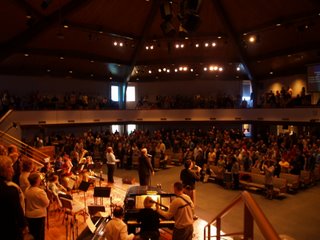
"The New Beginnings Conference" at Emmanuel Baptist Church, Enid, Oklahoma, Sunday morning, January 7, 2007, Paul Burleson, Guest Speaker, got off to a wonderful start Sunday morning with over 1700 people in attendance in all the services.

A photograph from our second service Sunday morning.

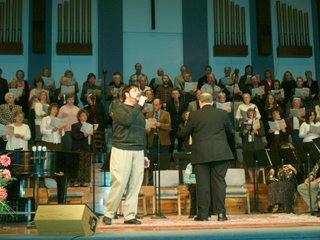
Listen to our choir and orchestra's special Jesus What a Mighty Name! - Mike Weatherford, soloist.

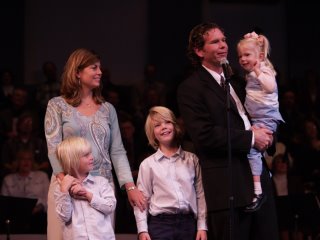
Our special guests included fellow blogger Bryan Riley, his wife Tara, and their three children. The Rileys are currently serving as YWAM missionaries.

It was a privilege to introduce my dad, Paul Burleson, and to hear him preach his first sermon in the series entitled "What I Wish I Had Known Forty Years Ago." The responses from people to the message were incredible. It is well worth the next thirty minutes of your life to listen to it yourself.
Listen to What I Believed Then (1967)
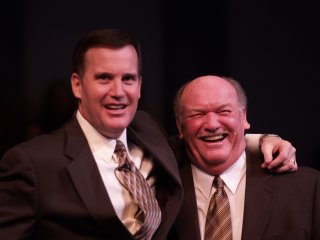
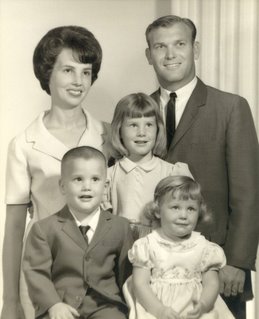
In order for you to appreciate some of the laughter in the introduction of the message, the following three pictures are offered for your edification -- and my embarrassment.

The Paul Burleson Family in 1967

My dad had fun pointing out what I looked like in 1967

And what I looked like when I was on my twentieth birthday!

Some people thought I looked like Earl.
Now that you understand the laughter, I hope you take the time to listen to the entire message. My father explained that we would never appreciate where he is today until we comprehend where he was forty years ago. What I Believed Then (1967) sets the foundation for all the messages.
The comment section is open. We have heard from people all around the world, even from many of our troops in Baghdad who are looking forward to listening to the messages. We trust all of you will enjoy the conference as much as those of us who are there in person.
Sunday night's message, entitled "I Believe in the New Covenant," --- probably the clearest, most biblical explanation on the life transforming power of the New Covenant I have ever heard -- will be posted tomorrow.
In His Grace,
Wade Burleson
Friday, January 05, 2007
Emmanuel Enid's First Internet Bible Conference
 This Sunday at Emmanuel Baptist Church in Enid, Oklahoma, my father - Paul Burleson - will begin a weeklong Bible Conference entitled "What I Wish I Had Known Forty Years Ago." I asked him several months ago to prepare this special series for our church, and I wanted him to particularly focus on those significant, life transforming spiritual truths God has shown him during his fifty years of pastoral ministry. What he shares will challenge your traditional way of thinking, but it will also warm your heart. We invite you to join us.
Many of you know my father by reputation. He is a graduate of Southwestern Seminary and has pastored Southern Baptist churches in Texas and Oklahoma these past five decades. There are now literally thousands of pastors across the United States who were discipled by him while they in seminary and attending Southcliff Baptist Church, just a few miles from Southwestern. He continues to travel the country as an intinerant teacher, and is known by Southern Baptists nationwide.
During this coming week I will post the the sermons that Paul Burleson will preach at Emmanuel during our January 7-10 Bible Conference. Joel Engle will be leading the worship, and we may also post a couple of special worship times during the course of the week. I will follow this posting schedule regarding the messages:
Monday -- What I Believed Then (1967)
Tuesday -- I Believe In The New Covenant
Wednesday -- I Know Who Is The Boss
Thursday -- I Know Where The Truth Is
Friday -- What I Believed Then And Still Do
I hope you take the time to listen to each message and let us know what you think. The comment section will be open for our questions or observations about each message. My father has made a journey from a very strict Fundamentalist who focused on the performance and failures of others, to a very grace oriented, relational Christian who allows God to do His unique work in others --- according to His timetable. He has never lost his conservative belief in the authority and sufficiency of the Word of God, but the transformation that has occurred in his Christian life and in his views of what really is important in one's Christian understanding is remarkable. I have the sneaking suspiciion that much of what he says in this Bible Conference can be a help to all of us who affiliate with the Southern Baptist Convention in this day and age.
Tune In Sunday Night at 11:00 p.m. Central Time for Monday's post of the message delivered Sunday morning at Emmanuel Baptist Church.
In His Grace,
Wade Burleson
Thursday, January 04, 2007
Will Someone Please Tell Me What Difference It Makes?
A very bright seminary employee of one of our Southern Baptist Convention seminaries wrote a comment on SBC Outpost yesterday saying, "If a private prayer language is that big of an issue to some, then over time I believe trustees can make those changes (to the new policy that forbids missionaries from having a private prayer language).
I responded to the professor's comment in this manner.
The issue in the Southern Baptist Convention is NOT ABOUT private prayer languages. It is about the freedom for orthodox, evangelical Southern Baptists to disagree on secondary and tertiary doctrinal issues.
Don’t get hung up on 'private prayer languages,' or Calvinism, or a church's style of worship, or the proper administrator of baptism, or elder rule, or the methodology of the ‘contemporary’ church.
The issue is FREEDOM for autonomous churches and independent Southern Baptist people to COOPERATE in missions and evangelism though we may not agree on secondary and tertiary doctrinal issues — whatever they may be!!
For you to continue to say the issue is 'private prayer languages' makes me wonder who else is missing it."
A Very Clear Illustration of the REAL ISSUE in the Southern Baptist Convention
I would encourage you to realize that there are currently two interpretative positions on the issue of private prayer languages in the Southern Baptist Convention. Some would like to write a book entitled "Unintelligible Prayer: The Futile Search for Biblical Support,” implying that anyone who believes the Bible teaches that to pray (privately) in an unintelligible manner should disqualify you from leadership or mission service in the Southern Baptist Convention.
Southwestern Theological Seminary is the center of this cessationist viewpoint and the two men who most represent this kind of thinking are, first . . .
Dr. Malcolm Yarnell, a professor at Southwestern Seminary who has written a white paper entitled Speaking of ' Tongues,' What Does the Bible Teach?
Second, Dr. Emir Caner, head of the College at Southwestern, has also written a white paper espousing the cessationist position entitled Southern Baptists, Tongues and Historial Policy.
These two men are bright. They are Southern Baptist. They believe to pray in tongues cannot be supported by Scripture.
On the other hand, there is another view among Southern Baptists that Scripture does permit, and in fact teaches, that the Spirit of God gifts some believers to pray in an unintelligible language -- to God -- for for their own edification. Two Southern Baptist men who would hold to this position would include, first . . .
Dr. Alan Cross, a Southern Baptist pastor and no small theologian in his own right, has written an article entitled Evangelicals and the Holy Spirit: What About Speaking in Tongues?
Dr. Alan Cross follows up with an outstanding contribution to the current Southern Baptist theological dialogue with an article entitled Evangelicals and the Holy Spirit: The Role of the Holy Spirit in Prayer which is an examination of what is commonly called a private prayer language.
Second, Dr. Sam Storms, a fellow Southern Baptist and an astute theologian and author has written two excellent articles on the subject simply called The Southern Baptist Convention and Tongues: Part 1 and The Southern Baptist Convention and Tongues: Part 2.
I have read all the articles by all four men. Here are a couple of observations about their writings:
(1). Dr. Yarnell and Dr. Caner are no more Scriptural or Biblical in their presentation than Dr. Storms and Dr. Cross. In fact, it seems to me that Drs. Storms and Cross appealed more to Scripture than Drs. Yarnell and Caner who seemed to support their views more on Baptist history and tradition than an exegesis of the sacred text.
(2). These two views are mutually exclusive. In other words, if you are a continualist, you cannot be a cessationist. Likewise, if you are a cessationist, you cannot at the same time be a continualist. Both views cannot be right at the same time. Therefore, someone is right and someone is wrong.
(3). Now comes the twenty four million dollar question --- who's right? Is there such a thing as a gift of the Spirit of God that enables a person to pray in the Spirit in a tongue that is unintelligible (possibly an angelic language?), or do those who pray this way come under the influence of something else other than God's Spirit?
WHAT DIFFERENCE DOES IT MAKE?
What difference does it make to a drunk in need of a Savior to deliver him from his demon of addiction?
What difference does it make to a woman who has been abandoned by her husband and is in need of a love that is eternal, unconditional and found only in a relationship with Jesus Christ?
What difference does it make to the one billion people in India who are in need of deliverance from their three million gods of the imagination and require a knowledge of the one true God?
What difference does it make to the fanatical Muslim who has a hard enough time understanding the clear language of the gospel of a Redeemer who died as a Substitute for sinners?
What difference does it make among evangelical Christian men and women who are bound together by a common love for the Lord Jesus Christ and are committed to take the gospel of Jesus Christ to a world in need of good news?
Please, someone, somewhere, somehow, tell me . . .
What difference does it make?
Can those of us Southern Baptists who disagree on this doctrinal issue -- and others -- that are not essentials of the faith, cooperate together in ministry and missions through our Cooperative Program for the sake of a lost world, the good of God's people, and the glory of our God? Could it be that those who are making these tertiary doctrinal issues a matter of primary importance and EXCLUDING people who disagree are actually harming our convention by causing us to lose sight of that which is truly important.
I ask, for the final time, what difference does it make?
In His Grace,
Wade Burleson
Wednesday, January 03, 2007
Christ-honoring or Culture-chasing? Do We Even Know the Difference?
The following is an email I received from Tom Willoughby, a Southern Baptist pastor in Missouri. The events Tom describes below happened at his church Wednesday night. Read his description of the service and ask yourself if his church is a Christ-honoring, evangelical Southern Baptist church, or a Culture-chasing Southern Baptist church which we ought to either censure or withdraw fellowship.
I say, without hesitation (and more than a little admiration), that Tom's church is the former!
____________________________________________
I caught my Wednesday Night group off guard. We've been going through the BF&M 2000 for the last few weeks and we just did Salvation last week. So I came in and said that we were going to think a little more about salvation, but specifically missions.
I told them that they had just been appointed as missionaries to reach a tribe whose name I made up. I said that they had just been dropped into the valley where their tribe is located (incidentally, I said that the tribe was about 9,000 strong located within a ten mile radius (this happens to be the number of people within a ten mile radius of our church)). I then asked them how, not knowing anything about their tribe, they were going to reach them with the Gospel? I set up a dry-erase board and we began 45 minutes of brain-storming. They came up with some excellent ideas. Better than I could have imagined. Such as:
Pray
Make friends
observe customs and practices
identify their leaders
learn what they enjoy
observe clothing
learn the language
work with kids first to gain access to parents
dress like them
learn their style of music
make sure that in giving any type of gift that we do not create needs that they cannot meet themselves
learn their spiritual views
have patience
be kind and loving
Well, the list went on and on. Finally, one guy named Tim, in his early twenties I recently led to Christ is sitting their next to his wife and I see the light come on. He says, "You know, everything that's up there could also apply to the people around here. We could do all of those things right here in El Dorado." Exactly!
After the obvious follow-up, I then shared with them that the missionary in this tribal region viewed all of his supplies as tools to reach the people. Nothing was irreplaceable. If that is the case, then how, as missionaries to El Dorado must we view our possessions? Everything we have becomes a means to an end.
And then I asked them, if we are not willing to do the things listed on the board in El Dorado, then obviously we are not serious about reaching people, so, what are we here for?
You could have heard a pin drop. It was beautiful! People stuck around afterward thinking about what needed to happen to reach our community. Please pray that God will continue to use this study to spark a fire within the hearts of our membership.
Well, thanks for reading my ramblings. Hope it was edifying in some way.
In Christ,
Tom
Tuesday, January 02, 2007
The Many Faces of the SBC: A Conference on Baptist Identity
I have received a couple of emails from individuals who desired more information about The Baptist Identity Conference, February 15-17, in Jackson, Tennessee.
I hope that the conference is well attended for a variety of reasons, and, if possible, I also plan to attend.
My prayer is that some of our Southern Baptist brothers will wake up and recognize that not all Baptists are alike. One seminary professor who seems to not be able to fully grasp the diversity within the SBC wrote yesterday on another blog, "I remain a Baptist and will not become a Calvinist, a Charismatic, or a Culture-chaser.
Though I love the professor's alliteration, I find his assumptions disheartening.
There are plenty of Southern Baptist Calvinists, Southern Baptist Charismatics, and Southern Baptist Culture-chasers. I assume the professor means contemporary churches or pastors when he uses the term 'culture-chasers.' Many of our youngest SBC pastors and church planters do church 'creatively,' seeking to engage culture. Their motto is 'Don't just go to church, be the church' and they wish to transform individuals through the power of the gospel, by taking the good news to the people where they are.
To even begin to say or imply that these churches, pastors or people are NOT Baptist is the problem we are facing in our convention. A handful of people in the SBC are attempting to narrow the parameters of cooperation and tighten the definition of what it means to be 'Southern Baptist.'
It won't work. Southern Baptists will not allow the narrowing to succeed. This Baptist Identity Conference can possibly be one of those places where Southern Baptists leaders will actually make statements that go a long way toward keeping our conservative, evangelical convention broad in cooperation. Of course, not everyone on the program will be of the same mind, but that is the beauty of this conference and the reaons it could well serve as a model for our convention as a whole. We are a diverse but cooperative, conservative people. We MUST resist that the demand for doctrinal conformity on tertiary issues must be adamantly and firmly resisted for the good of our convention and the future health of our cooperation.
Again, many Baptist Calvinists, Charismatics and 'Culture-chasers' are currently identified with the Southern Baptist Convention and they all cooperate in our missions and evangelistic efforts both financially and personally. any attempts to 'identify' them as something other than 'true' Southern Baptists, and either by inference, or direct action, remove them from leadership, cooperative missions ministry, or fellowship will be catastrophic for our convention.
Not everyone on the program will agree with what I am saying, nor are they open to Southern Baptists who think differently than them on tertiary issues. In fact, as Dr. Mohler has rightly said in his Crosswalk column, "The misjudgment of true fundamentalism is the belief that all disagreements concern first-order doctrines. Thus, third-order issues are raised to a first-order importance, and Christians are wrongly and harmfully divided."
There is the potential for some great dialogue to occur at this conference. The cost is $50.00, which includes three meals, and I believe it could be well worth the fee.
Speakers include:
Paige Patterson, of Southwestern Baptist Theological Seminary will speak on “What Contemporary Baptists Can Learn from Anabaptists.”
Timothy George, dean of Beeson Divinity School, will speak on “The Future of Baptist Identity in a Post-Denominational World.”
Tom Rainer, president of LifeWay Christian Resources, will speak on “Evangelism and Church Growth in the Southern Baptist Convention.”
David Dockery, president of Union University, will speak on “The Southern Baptist Convention since 1979.”
Frank Page, president of the Southern Baptist Convention, “The Role of the Cooperative Program in the 21st Century.”
Russell Moore, dean of the School of Theology and senior vice president for academic administration at The Southern Baptist Theological Seminary, “T.T. Eaton: Drawing on 19th Century Baptist Models.”
Steve Gaines, pastor of Bellevue Baptist Church in Cordova, Tenn., “The Future of the Traditional Church.”
Greg Thornbury, dean of the School of Christian Studies at Union University, “The Angry Young Men of the SBC.” (I have a call in to Dr. Thornbury about this topic and I should be able to visit with him sometime today. I intend to post on this subject matter at a later date).
Ed Stetzer, missiologist and research team director at the North American Mission Board, “Toward a Missional Convention.”
Mike Day, director of missions for the Mid-South Baptist Association in Memphis, Tenn., “The Future of Baptist Associations and State Conventions.”
Hope to see you in Jackson, Tennessee in February.
In His Grace,
Wade
Subscribe to:
Posts (Atom)