Wednesday, April 27, 2016

The Conversion of Andrew Jackson

Recently it was announced that the extraordinary Harriett Tubman will be featured on front of the $20 bill. The  portrait of the 7th President of the United States, Andrew Jackson, will be removed by the year 2020. I wish it were possible to celebrate the rise of new heroines while displaying restraint in removing old heroes.

Andrew Jackson is my favorite President of all time.

More so than Lincoln, Washington, and Reagan. Jackson's life story captures me more than all our other Presidents.

Unfortunately, Americans today only hear the rightful criticisms of Jackson's Indian Removal Act and his lack of opposition to slavery, while never hearing the monumental things this founder of the Democrat Party accomplished on behalf of our nation.

Forgetting to appraise people according to their culture and times will sometimes lead us to mistakenly dismiss the worthy. Caution is in order before condemning ancestors, recognizing the general darkness of former days often tainted one's personal behaviors.

Enid, Oklahoma has some very strong connections to the life story of Andrew Jackson. A 1910 graduate of Enid High School, Marquis James, wrote an award winning biography of our nation's 7th President. James' two volumes on the life of Andrew Jackson - Volume 1 The Border Captain (1933) and Volume 2 Portrait of a President (1937) - were combined into the 1938 Pulitzer Prize winning book The Life of Andrew Jackson. To this day, it remains the most colorful and interesting biography of President Jackson.

When President Jackson pushed for the Indian Removal act in 1830, the greatest opponent to the President's ambition of moving all Indians to "Indian Territory" (Oklahoma), was the erudite Cherokee Chief, a man named John Ross. Chief Ross's great-great granddaughter is an across-the-street neighbor and member of the church I pastor. Her family's story of how the Cherokees (and other tribes) were forcibly moved to Indian Territory is not one of the brighter chapters in American history, but any Oklahoman with a mixture of Indian blood is most likely directly connected with President Jackson through the land you now call home (Oklahoma).

The reason I feel a strong affinity for Andrew Jackson is the dramatic story of his conversion to faith in Jesus Christ during the later years of his life. Though raised by a mother who desired him to be a Presbyterian minister and married to a woman devout in her Christian faith, both of these women died very early in their lives, leaving Jackson to serve as President of the United States (1829-1837) without their influence. Though known to defend the Christian faith as President, Andrew Jackson had no personal experience with it until he reached the age of 75.

The Scar of Abuse

Born on the Ides of March (March 15), 1767, Andrew Jackson came into this world just three weeks after his father, Andrew Sr.,  died from injuries sustained attempting to move a log on their land near
Waxhaw, North Carolina. Both North Carolina and South Carolina claim Jackson as a native son, but Marquis James says Mrs. Jackson gave birth to Andrew while staying in her brother's home in South Carolina, not far from Waxhaw, North Carolina.

Andrew's devout Christian mother taught him to read at an early age, and when The Declaration of Independence was signed in Philadelphia on July 4, 1776, it was nine-year-old Andrew who stood on a chair and read the Philadelphia newspaper's account as the "town crier" to the inhabitants of Waxhaw. The Declaration of Independence meant war with the British.

An expert horseman,  young Andrew Jackson eventually became a messenger boy for the Revolutionary soldiers.  When Andrew was only 13 years old, he was captured by the British and imprisoned in Camden, South Carolina. While in prison, Andrew contracted small-pox. and he would have died had it not been for his mother coming to Camden to successfully negotiate her son's release. She nursed Andy back to health back, but a year later, Andy's mother would leave for Charles Town to assist in the care of other wounded Revolutionary War soldiers. While ministering to the wounded in Charleston, South Carolina, Andy's mom contracted cholera and died, leaving the future President of the United States orphaned at the age of 14.

But the event that kept Andrew Jackson from "following Christ" occurred on the day he was captured by the British soldiers. It filled his heart with hate.

Marquis James recounts the event:
The British officer in command "in a very imperious tone" directed Andy to clean his boots. 
"This order he very promptly and positively refused, alleging that he expected such treatment as a prisoner of war had a right to look for."
The officer lifted his sword and aimed a violent blow. The boy threw up his left hand. It was cut to the bone, and a gash on his head left a white scar that Andrew Jackson carried through a long life that profited little to England or any Englishman." 
Biographer Marquis James is known as "the unqualified master of understated metaphors."  The phrase "the white scar...profited little to England or any other Englishman" is an understated way of saying Andrew hated the English people and England in general. The scar on his cheek, which turned whiter as the years progressed, served as a visible reminder of this hatred.

Jackson was fueled by this hatred in his amazing defeat of the British in New Orleans to end The War of 1812. He would often skip British protocol with diplomats while President because he despised courtesy to the British. Andrew Jackson's abuse as a boy at the hands of a British officer kept him in a state of perpetual resentment towards all things British.

Until his conversion.

The Conversion of Andrew Jackson

It was in 1842, while in retirement at his homestead (the Hermitage) outside of Nashville, that Jackson came to faith in Christ.  A week long series of meetings was held on his property, led by Dr. Edgar, an evangelical Presbyterian minister from Nashville.

The Hermitage outside Nashville
During the last of the revival meetings, on a Saturday, the guest preacher noticed the former President was paying particularly close attention to the message. Dr. Edgar, on the spur of the moment, decided to give a very personal illustration of God's providence. The preacher sketched the life and career of a Tennessee pioneer who had "escaped the perils of the wilderness, the wiles of the Indian. the dangers of war, the conflicts of politics,  and the attempts of the assassin." This was Andrew Jackson's life.

Then the preacher asked, "How can such a man pass through such scenes as these unharmed and not see in it an Omnipotent Hand?

At the close of the service the former President asked the preacher for a personal visit. However, Dr. Edgar could not do so until Sunday morning. The former President spent the greater part of Saturday night reading the Bible and in prayer. When the preacher came to the Hermitage the next morning, Andrew Jackson announced to the preacher that he had given his life to Christ and would like to "join the church." Dr. Edgar asked Jackson a series of questions about his faith, and the conversation concluded with the following dialogue.
General there is one more question which it is my duty to ask you. 'Can you forgive all your enemies?' 
Jackson was silent for a good while. At length he said, "My political enemies I can freely forgive, but as for those who abused me when I was serving my country in the field, and those who attacked me for serving my country doctor that is a different case.
Dr. Edgar, however, insisted that the forgiveness must be entire and embrace the whole family of man.
After a considerable pause the candidate got so far as to say that he thought he could forgive even the men who had made his defense of his native land a pretext for assailing him.
The scene in the little church that morning was never forgotten by any who witnessed it.
Besides being crowded to the very uttermost the windows were darkened by as many black faces as could get near enough. At length the former President and his daughter stood up to make the usual public profession.
He leaned heavily upon his walking stick with both hands and his face was wet with tears. When finally he was pronounced a member of the church, the feelings of the congregation, which had been restrained during the ceremonial, burst forth in sobs and cries, and the clergyman himself was unable to speak. Some one started a familiar hymn, and in singing this the feelings of the excited company at last found both expression and relief. (General Jackson: Hero of New Orleans by Oliver Dyer, pp. 361-363).
In Andrew Jackson's conversion I am reminded that the mark of genuine Christianity is the ability to forgive even one's enemies. Yes, it may take time. Yes, it isn't easy (it requires the power of God), but the evidence of the presence of God in one's life is the ability to give the same grace which God has given you.

Wednesday, April 20, 2016

A Parable of a Fruit Inspector and a Fruit Promoter

Jesus said, "If your brother sins against you seven times a day,
and returns to you seven times, saying, 'I repent,' forgive him" (Luke 17:4).


In a beautiful village with a bustling town square, Mr. Fruit Promoter sat at his fruit stand and promoted his assorted fruits to all who walked through the market.

Periodically, Mr. Fruit Inspector would come to Mr. Fruit Promoter's stand and stop for a close inspection.

Never a dark spot would he miss. Never a crushed fruit would he overlook. Never a stain would he ignore.

"Get that fruit out of here! Don't you know that one bad apple can spoil the entire stand!"

Mr. Fruit Promoter calmly responded, "Sir, I see the dark spots on my bad apples better than you. I know the oranges that have been crushed and have dried out, and I'm not blind to the stains on my other fruits. However, I can't throw my bad fruit out."

"But you are promoting rotten fruit?"

"All fruit by nature is rotting. Because I'm a Fruit Promoter, I use even my rotten fruit."

Mr. Fruit Inspector argued back, "But rotten fruit is useless!"

"No sir, it's not. You speak as a Fruit Inspector. I'm a Fruit Promoter. Every rotten fruit has seeds within that spring into something new. Every tainted and stained skin on rotten fruit can be used to enrich an entire field of new fruit, creating life out of decay. Because of my love for fruit in general, I can see good in all fruit, regardless of rottenness."

Mr. Fruit Inspector objected, "But you have an obligation to the public to display a perfect fruit stand. You have an obligation to sell only perfect fruit!"

Mr. Fruit Promoter points to the sign in front of his stand which said:
Come, all you who are hungry, come to the stand. If you who have no money, come, buy and eat! Come, buy fruit and wine without money and without cost. (Isaiah 55:1)
"I'm not in the fruit business to make money or impress people. I'm in the fruit business because I love fruit and want to share that love with others. It's a calling."

Mr. Fruit Inspector made one final argument. "If you promote rotten fruit, you will give people the wrong impression about fruit in general."

"Sir," said Mr. Fruit Promoter, "I still don't think you understand. I promote fruit. You inspect fruit. You are the one calling my fruit rotten. I see the same dark spots that you see, I see the same crushed and bruised skins. I see the same stains. I too am fighting fruit disease. However, I see potential in the future of all my fruit."

Mr. Fruit Inspector walked away in a huff, but turned back and yelled, "You love fruit too much! You are going to ruin the reputation of fruit in general."

To which Mr. Fruit Promoter replied, "Thank you for acknowledging my love for fruit. I'm Mr. Fruit Promoter. I love fruit."

Monday, April 18, 2016

When Women Ruled the World from the Oracle of Delphi

"The greatest blessings come by way of madness, indeed of madness that is heaven sent." - Socrates on the Oracle of Delphi.

When the ancient peoples around the Mediterranean Sea basin wanted wisdom from the gods they went to oracles. An oracle was a person who spoke (orated) for the gods in various temples.

The most famous Temple of oracles was the Oracle of Delphi (Greece). Portions of the Bible can only be understand when one has a working knowledge of ancient Greece and the importance and influence of women at the Oracle of Delphi.

During the time Israel was in Babylonian captivity (6th century B.C.), a ruler Smyrna, Lydia (modern Turkey) named King Croesus wanted to find the best oracle in the world, one with powers to divine the future better than all others.

So in 560 B.C. Croesus sent his emissaries on a 100 day journey to the seven most popular oracles in the world with a question:

What is King Croesus doing today?

Croesus kept a diary during those 100 days and when his messengers returned to Smyrna, he compared notes in his diary to what the oracles said. Of the seven oracles consulted, only the Oracle at Delphi (Greece) accurately described what Croesus was doing on the day the question was asked. The Oracle of Delphi said:
"I count the grains of sand on the beach and measure the sea; I understand the speech of the dumb and hear the voiceless. The smell has come to my sense of a hard shelled tortoise boiling and bubbling with a lamb's flesh in a bronze pot: the cauldron underneath it is of bronze, and bronze is the lid." 
To eat turtle soup mixed with lamb's meat prepared in a bronze pot was exactly what Croesus was doing on that particular day. This dish was not typical cuisine for kings, especially one as rich as Croesus. Amazed at the Oracle of Delphi's prescience, Croesus sent emissaries back to Delphi with gifts of gold and silver for the oracle and they asked additional questions.

For the next one thousand years (560 B.C. to A.D. 371), the Oracle of Delphi would serve as the most prestigious and revered fortune teller in the world. Her answers guided the civilized world for the timing of wars, the establishment of new settlements, and wisdom to appease the gods.

The Spartans consulted the Oracle before the Battle of Thermopolae, a turning point in the war between the Greeks and Persians, expertly portrayed in the recent Hollywood motion picture 300. Alexander the Great traveled to Delphi to consult with the Oracle before he set off to conquer the world. Socrates often went to Delphi from Athens with his students. The Oracle once declared Socrates the wisest man among the Greeks. This led Socrates to say, "This one thing I know: I know nothing." 

Yet the Pythia's pronouncement made such an impression on Socrates that it propelled him into a lifetime of learning by asking questions of others, something we now call the Socratic method of learning.

Every major Greek and Roman leader, soldier, or politician would either personally travel to Delphi or send emissaries to Delphi to consult the Oracle. The influence of the Oracle of Delphi only dissipated after Emperor Constantine converted to Christianity and the Roman world adopted Christianity as the official religion of the state.

The Oracles at Delphi Were Women

Delphi (pronounced Delphee in Greek, not Delph eye) is a community in the mountains 100 miles northwest of Athens. Greek mythology declares that Zeus let loose two eagles to find the most beautiful location on earth. The eagles circled the lands and collided at Delphi. The Greeks believed Delphi to be the center of the world (naval), around which the universe revolved.  They built a temple to the god Apollo at Delphi, and within that temple, they placed a chamber where the Oracle of Delphi greeted guests on only one day a month - the 7th day, Apollo's favorite number.

Apollo was often called Pythian Apollo because he allegedly killed a giant python snake at Delphi and took the Oracle of Delphi as his bride own. The women who served as the Oracles at Delphi were given the title of Pythia in honor of Apollo's heroic feat. Two great stone pythons guarded the Temple of Apollo at Delphi, and those who wished to have their futures foretold would enter the Temple of Apollo and go to the Oracle's room in the southwest corner of the Temple.

The Pythia were a common women from the village of Delphi who had been chosen by the priests of the Temple to serve as the Oracle. The word common defines ancestry, for some of the women from Delphi who served as Pythia were slaves. The word common, however, does not define their physical beauty. Greek and Roman historians often commented in their writings on the striking beauty of the Pythia at Delphi. This beauty seemingly was a prerequisite for being chosen as a Pythia. In her divination room would be the naval stone (omphalous) which marked the Temple as the center of the world, a golden tripod upon which the Pythia would sit as she greeted guests, and across the room from where the Pythia sat was the alleged tomb of Dionysius.

The Temple of Apollo was built on inersecting geographical fault lines at Delphi. The Pythia would sit on her golden tripod over two interesecting crevices in the earth which seeped ethelyne, ethane, and methane--a cocktail of non-addictive but highly hallucinogenic gases. Contemporary Greek historians recorded a strong, sweet smell filled the Oracle's chamber, the tell-tale sign of ethylene, one of the world's first aenesthetics.

The Pythia would removed a cap from the naval stone (see picture to the left) that sat beside her chair, releasing the hallucinogenic gases that had collected underneath the naval stone which sat on top of the X of the fault lines. As the gases released, the Pythia would enter into a conscious trance as she considered the questions presented her. Swaying back and forth, she would eventually utter her answers.  The priests did not invent answers from uncipherable utterances of the Oracle, but faithfully recorded what the Oracle said. The Oracle would give a lucid, sometimes crytpic answer, in either poetry or prose. Plutarch called the Oracles of Delphi "inspired maidens." The answers to the questions posed to Oracle would be given to the supplicants, who considered the poetic responses Apollo's direction for their lives.  Entire nations would wait with baited breath for an answer from the Oracle at Delphi. It is not an exaggeration to say that a woman's words ruled ancient civilization.

Paul and the Pythia

When the Apostle Paul visited Philippi (51 A.D.) during his second missionary journey, he and Silas were followed by a young girl for many days who kept crying out to the people of Philippi, "These men are servants of the Most High God who are proclaiming to you the way of salvation" (Acts 16:17). Many Christians have a hard time understanding what Paul did next. But Paul, greatly annoyed, turned and said to the spirit, 'I command you in the name of Jesus Christ to come out of her!'And it came out at that very moment. (Acts 16:18).

The only way you can understand why Paul did what he did is to realize the biblical description of this young girl. The English versions of the Bible say she had "a spirit of divination" (Acts 16:16). The literal Greek word used to describe this woman is Pythia. She could have served in the Temple of Apollo in Delphi, or she could have been a lesser oracle. What we do know is she had the spirit of divination. She followed Paul and Silas and spoke of them as being spokespersons of Zeus, the Most High God, and said the people should listen to their words of deliverance in the same manner they listen to the words of an oracle. Of course, the Pythia was misrepresenting Paul and Silas. She was possessed by a demonic spirit and Paul delivered her. Michaelangelo would later paint the Pythia of Delphi on the ceiling of the Sistine Chapel, but the Apostle Paul showed no such reverence to the Pythia he met in Philippi. One should always remember that all that glitters in organized religion is not gold.

When the Pythia's masters saw their hope for profit in Philippi was gone, they seized Paul and Silas and dragged them before the authorities and demanded the disciples of Christ be imprisoned. Paul and Silas were thrown in jail where they would later lead the jailor to faith in Christ (Acts 16:31). The story of the conversion of the Philippian jailor and his family is a vivid reminder that God orchestrates all events (like the Pythia's actions at Philippi) for His glory and the ultimate good of His people (like the Philippian jailor).

Nothing much has changed in the world in the last 2,000 years. People still revere what God considers evil. People still persecute those who preach the gospel. But in the end, God always wins.

Saturday, April 09, 2016

"The Church"- Do You Think People or Steeple?

‘When someone mentions they have a female pastor of their church, I immediately reply that they do not have a pastor and they do not have a church.” John MacArthur
“When a pastor declares a female can’t pastor a church, I immediately reply every Christian female is the church, and she’s more qualified to pastor herself than he is.” Wade Burleson
__________________________________________

One of the fundamental problems with institutional Christianity today is the mistaken belief by professional pastors that the church of Jesus Christ is similar to the temple of national Israel. 

It is often said in the institutional church pulpit that the people are the church, but in practice, the church is seen as the institution. Even the esteemed John MacArthur is making the mistake in his quote above of turning the church into an institutional structure like the Old Covenant temple of Israel. 

In the Old Covenant, temple leaders were all male. In the Old Covenant, birthright and gender were everything. In the Old Covenant, a hierarchy of power and authority set apart the priests (all male) from the laymen (males and female). If you were a Jewish, male, temple leader you were both in theory and practice closer to God because you were the priest, and only you could abide in the temple.  

When Jesus inaugurated the New Covenant on the night before He died, He told His disciples that through the sacrifice of His body and blood He would inaugurate a New Agreement between God and sinners whereby the world (not just Israel), males and females (not just males), all people (not just the priests), could come freely and boldly before God's "throne of grace" through faith in the obedience of God's Son. 

The problem of male patriarchy today is a theological one.

John Gill, pastor of Charles Spurgeon's Metropolitan Tabernacle Church one hundred years before Spurgeon, taught me that in the New Covenant, the ordinances - baptism and the Lord's Supper - are ordinances (or "commandments") of Christ, and not the "church" (e.g. "institutional church"). I will never forget the light bulb that went on in my head when I read this Baptist preacher's writings (from 250 years ago no less!) and discovered that what keeps men believing the church is an institution is the institutional ritual of only "ordaining" men to carry out "the ordinances."

In other words, John MacArthur and others sees "baptism" and the "Lord's Supper"  as ordinances of "the church" (e.g. institutional church with a "steeple") and so, any "church" that "ordains" females is not a church, because God never allows "females" to participate in the ordinances - they aren't priests unto God.

Well, I believe Christ commanded baptism and the Lord's Supper, and these two things are not under the "authority" of the institutional churches. So any person in Christ (male or female) may properly and biblically baptize a convert to Christ, and any person in Christ (male or female) may properly and biblically share and serve communion (e.g. bread and wine) with other believers in remembrance of Christ.

Any Christian may do this - because any Christian (male or female) is the church. Christ commissioned His church (e.g. "us") to keep the ordinances of baptism and the Lord's Supper!

So...

I understand when MacArthur speaks of "the church" he's talking about a building with a steeple. When I speak of "the church" I am talking about a body of people.

God gifts His people as He sees fit.

Of course, most of us belong to an institutional church. Some Christians may have "problems" with females in a position of "pastor" at an institutional church, but that "problem" is no different than the problem some men once had with a woman being President of the United States, or CEO of a national corporation, or .... well, you get the picture.

As long as there are those who continue to think of the "church" as an institution like the Old Covenant temple of Israel, then male authority will be defended. But when we begin to see the NEW TESTAMENT definition of the church as a body of believers who serve God and each other as He's gifted us (male or female), then we move down the road of true New Covenant living.


Friday, April 01, 2016

A Great Awakening Is Coming to Enid and America

Today a man who's been attending Emmanuel Enid's Refuge worship services came to our church offices. His name is Troy, and he expressed a desire to be baptized, professing he'd come to faith in Jesus Christ. He talked to Melissa, one of our ladies in the outer office, and he came to tears as he explained what Christ had been doing in his life. Melissa listened with interest, and then she went to get one of our pastors, Joseph Drueke. 

Troy recounted to Joseph that he'd recently experienced a very powerful dream. Through this dream, he'd become convinced that he was to profess his faith in Christ through baptism. He explained to Joseph that over the past six months Jesus Christ had invaded his life and had radically changed him from the inside out. He believed Christ had saved Him, and the evidence was very tangible.  His heart for people had softened. His love for Christ had deepened. He was a "different man" because of Christ. He explained that during the worship services he learns "so much about Jesus Christ." 

Joseph talked with Troy about what baptism represents, and then he attempted to make arrangements for Troy to be  baptized at a later date. However, Troy told Joseph that he wanted to be baptized in "the ditch" by the church right then! 

Now, unless you're from Enid, Oklahoma, you'll have difficulty visually comprehending "the ditch" beside our church. It runs at a diagonal to Interstate Highway 412, a highway that runs east/west from the Atlantic Ocean to the Pacific Ocean. Thousands of cars go by this "ditch" every day, but the last thing anyone would think of when seeing the sparse, dirty water in "the ditch" is someone following Jesus Christ in believer's baptism. Joseph could tell that the Spirit of God had touched this man, and that he wanted to follow Christ in baptism at that very moment!

Our motto among our staff at Emmanuel is to always say "YES" when the Spirit is moving - no matter the potential costs, misunderstandings, or even obstacles. Joseph told Troy he'd baptize him right then in the ditch (without even changing clothes), but said, "I don't know if there is deep enough water to do it in the ditch, let's go look".

Pastor Joseph and Troy walked to the ditch. There wasn't much water, but like the Ethiopian said to Philip, "Look, here's water! What prevents me from being baptized?" Troy told Pastor Joseph there was enough water to profess his faith in Christ. Joseph had Troy sit on his knees. Unknown to the two men, Rachel (Emmanuel's Nursery and Preschool Director) followed them to "the ditch," and she snapped the photograph above right before Joseph baptized Troy. When this new convert to Christ came out of the water, he hugged Joseph, cried, and thanked him for being sensitive to the leadership of the Spirit.

Joseph said it was one of the most emotional, moving baptisms he's ever experienced. "I will never look at that ditch the same again," he says.  

I've told people for a long time that a Great Awakening is coming to Enid, Oklahoma and to America as a whole. I believe this with all my heart. We are beginning to see dozens of lives dramatically changed by the power of the Spirit. Over twenty people came to faith in Christ this past Sunday. People are talking about Christ to others in the their neighborhood grocery stores, their work places, and their schools. The Spirit is moving on, in and through people.

We are amazed at watching God at work. This isn't about Emmanuel Enid. It's an awakening of the lost through the sovereign work of the Holy Spirit. It's happening in other churches, other cities, and other countries. The Awakening is coming. The Holy Spirit is supernaturally breathing life into those who were dead in their "trespasses and sins," and those regenerated by the Spirit are seeing their lives radically being changed.

Jesus said, "I will build my church, and the gates of hell will not prevail."

He was right. The gates of hell aren't prevailing. The lost are being rescued in an Awakening that may have already begun.

Friday, March 25, 2016

Twas Thursday, not Friday; Sunday's Still Coming

All Christians believe Christ died and rose from the grave. This belief is foundational to Christianity. God justifies only those with this faith (Romans 3:25). Without such faith one has no hope of pleasing God (Hebrews 11:6).

However, more than a few people believe Christ died and rose from the dead without knowing when and why He died. Knowledge about the details of Christ's death and resurrection immeasurably strengthen one's conviction and assurance that Christianity is not one of many possible valid religions, but is the body of truth once delivered by God to us. To put it in specific terms, knowing the details of Christ's death deepens one's faith in God and decreases one's fear of man.

Jesus Christ Died on a Thursday, not a Friday.

If this is the first time you've heard that Jesus died on a Thursday, it might sound strange to your ears, particularly when powerful songs, great messages, and vivid memories revolve around Good Friday. However, if you allow yourself to be influenced by Scripture only (sola Scriptura), you will find that the Thursday death of the Messiah becomes a powerful demonstration of God's infinite ability to orchestrate His Story as the centerpiece of history.

Jesus died at 3:00 p.m. in the afternoon, on Thursday, the 14th of Aviv, 30 A.D at the age of 33, at that very time God appointed for the Messiah to die.  "I have come to fulfill the Law and the prophets" (Matthew 5:17), Jesus said. He did just as He said He would do--He fulfilled the Law. There is no other day, no other time, no other way Jesus could have died and there is no other day, no other time, no other way Jesus could have risen from the dead for the Law of God to be fulfilled.

For those reading this post who think that our sins are swept away by our promises to God or our performance for God, what I am about to write can help you see that trusting in any man-oriented religious performance keeps one from resting in Christ's work and performance which is the only thing that truly sets sinners free. The truth of what is written in this post will thoroughly erase any belief that God's mercy, love and grace is determined by our ability to adequately perform. Take a moment and determine to "Grow in grace and the knowledge of Christ" and read slowly and carefully through this post.

Jesus dying on Thursday and rising on the following Sunday is thoroughly supported by the Scriptures and is not a new proposition among evangelicals. Nearly one hundred and fifty years ago the scholarly Bibliotheca Sacra, vol. 27 (1870), pp. 401–429 published an article entitled The Crucifixion on Thursday – Not Friday by J.K. Aldrich. Greek and New Testament scholar Professor Brooke Westcott of Great Britain, author of the classic work An Introduction to the Study of the Gospels (Cambridge: 1881), pp. 343–349, adamantly maintained that Christ's crucifixion was on Thursday, not Friday.  In 1974 Christianity Today published The Day He Died, by Dr. Roger Rusk, Emeritus Professor of Physics at the University of Tennessee. In this short article, Dr. Rusk shows through his computer enhanced lunar calculations that Jesus died on Thursday, the 14th of Abib, 30 A.D.

The Way the Jews Measured Time

There are three basic things you need to understand about the way the Jews kept time in Jesus day before you can know why Jesus died when He did. The Jewish months revolved around eyeballing the moon during its phases of brightness in the sky. When a 'new moon' occurred (see chart), the priests would blow their horns and declare that a new 'month' had begun. Aviv was the first month of the new year for the Jews (see Leviticus 23:5), occuring in the spring as God woke nature from her winter slumber. Aviv corresponds to March/April on our calendar. Jesus died on the 14th day of Aviv, 30 A.D. at 3:00 in the afternoon which would correspond to April 6, 30 A.D. on our western calendar.

Second, the Jews in Jesus day did not call the days of their week Monday, Tuesday, Wednesday, etc... as we do. They called them "the first day of the week, the second day of the week, etc..." The seventh day of the week was a Sabbath and is known to us in the western world as Saturday. The 'first day of the week is what we call Sunday. Of course, Jesus rose on Sunday, the first day of the week (John 20:1).

Finally, a new day BEGAN for the Jews at 6:00 p.m. in the evening. In the western world we have six hours of night before 12:00 midnight and those hours are the last six hours of our day. Not so in Jesus' Jewish world. The hours from 6:00 p.m. to 12:00 midnight were the first six hours of a NEW DAY. So, Jesus died at 3:00 p.m. on Thursday, the 14th of Aviv, just three hours before the sixth day of the week (Friday), the 15th of Aviv, began.

The Reason Jesus Died on Thursday (the 14th of Aviv)

After Moses led the Jews out of their Egyptian bondage fourteen hundred years before Christ was born, God "appointed" seven Holy Days (holidays) for the Jews to keep throughout the year. These Holy Days, called High Sabbaths, were national celebrations of God's faithfulness and mercy to His people. God was very specific in His Law (Leviticus 23) as to when and how these Holy Days were to be celebrated.

The first three Holy Days occurred in the spring, during the month of Aviv, all within one week of each other. The first holiday was Passover. According to Exodus 12:1, the Passover lamb was to be chosen on the 10th of Aviv and slain on the 14th of Aviv. After the Passover lamb had been chosen on the 10th of Aviv, the people would inspect the lamb to make sure there were no spots or blemishes. The lamb could not have any broken bones or be defective in any way. Four days after the lamb was chosen, the lamb was slain.

At 3:00 p.m. on the 14th of Aviv, the lamb would be killed in preparation for the Passover meal. The 14th of Aviv was therefore called "the day of Preparation for Passover" in Scripture (John 19:14) .  The Jews would also use the day of Preparation (the 14th of Aviv) to sweep away any leaven in their houses in preparation for The Feast of Unleavened Bread. The Feast of Unleavened Bread began on the next day, the15th of Aviv, the same day the Passover Meal was eaten, and lasted for seven days. During this week long festival, the Jews were forbidden to consume bread with leaven.  As the week of Unleavened Bread began during the early hours of the 15th of Aviv (from 6:00 p.m. to 10:00 p.m. at night), the Jewish Passover meal would be eaten. The lamb that had been killed three hours earlier (at 3:00 p.m. on the 14th of Aviv) was roasted and eaten at the Passover meal after sunset. The lamb would be eaten along with the unleavened bread that had been prepared during daylight of Aviv 14. Leaven in Scripture is a picture of sin or evil. After the Passover lamb died and had been taken into the Jewish houses, sin and evil disappeared.

The Passover lamb always died on Aviv 14, and leaven was always swept away from the homes on Aviv 14. Again, this day of Aviv 14 was called the day of Preparation for Passover. The actual Feast of Passover was eaten after sunset, in the early hours of Aviv 15, the first day of Unleavened Bread. Remember, the Jewish day BEGINS at 6:00 p.m. so though the Passover meal was eaten between 6:00 p.m. and 10:00 p.m. of what we in the western world would consider the SAME day (Aviv 14),  but the Jews considered the NEXT DAY, Aviv 15.

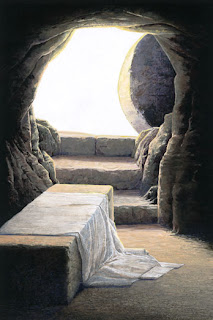
The first day of Unleavened Bread was considered a High Sabbath for the Jews. This High Sabbath was not a regular Sabbath (Saturday), but a special annual Sabbath. That means Friday, Aviv 15 was a High Sabbath and Saturday, Aviv 16 was a regular Sabbath. The resurrection of Christ occurred on Sunday morning (Aviv 17) after two Sabbaths, back to back, had been observed by the Jews. This is precisely what the New Testament teaches. The gospel writer Matthew describes the time when the disciples came to the empty tomb of Christ on Sunday morning by writing, “After the Sabbath(s), at dawn on the first day of the week...” (Matthew 28:1a).  The Greek word translated Sabbath in this text is “Shabbaton” (plural) not “Shabbat” (singular). Any English translation that does not use "Sabbaths" is mistranslating the Greek text. The crucifixion week had the High Sabbath on Friday plus the weekly Sabbath and Saturday.
Jesus died on the day of Passover Preparation Day, Thursday, Aviv 14. The next day, the First Day of Unleavened Bread (Friday)  was Aviv 15 and a special High Sabbath for the Jews. The next day, Aviv 16 (Saturday) was the regular Sabbath for the Jews. It was not uncommon for the Jews to have TWO Sabbaths back to back, an event that occurred at least once a decade, and this is precisely what happened during crucifixion week as stated in Scripture.

In further fulfillment of Scripture, Jesus died at 3:00 p.m. on Thursday, Aviv 14, at the very time the national Passover lamb was being sacrificed in the temple.  When the Jews counted days, they measured any portion of a day or night and considered it an entire day or night. Jesus was in the grave for 3 days and 3 nights. He was placed in the tomb on Thursday (Aviv 14), remained in the tomb all night/day Friday (Aviv 15; notice the night time comes BEFORE the day time in a Jewish day), all night/day on Saturday (Aviv 16), and into the night time hours (6:00 p.m. to 6:00 a.m. of Sunday, (Aviv 17).  Jesus rose from the grave sometime between the sunset following Saturday (Aviv 16) and sunrise of the first day of the week (Mark 16:9), which was Sunday (Aviv 17) for the Scripture says it was still night.  The time Jesus spent in the grave fulfills the prophecy Jesus said about His own death and resurrection: "For as Jonah was three days and three nights in the belly of a huge fish, so the Son of man will be three days and three nights in the heart of the earth" (Matthew 12:40).

The Anti-Type Fulfills the Type

Follow Jesus as He enters Jerusalem in the spring of 30 A.D. He entered the city on Sunday, Aviv 10, the day we call Palm Sunday. The procession for the national Passover lamb of Israel had just taken place. The lamb had been led into the city from the east and was taken to the Temple to be the public sacrifice for the nation of Israel, and event that would occur four days later (Aviv 14). The lamb was met by crowds of people waving palm branches and joyously singing Psalm 118. Jesus made His final entrance into Jerusalem on a donkey, following the national Passover lamb (Matthew 21:1-11). The Jews, many of whom had either known of Jesus or personally witnessed His great miracles, placed their palm branches in front of Him and shouted to Him passages from Psalm 118: "Hosanna to the Son of David!’ ‘Blessed is he who comes in the name of the Lord!’ ‘Hosanna in the highest!’”

Just as the Jews began to cleanse their homes of leaven in preparation for Passover, so Jesus went to His Father's house and cleansed the Temple of evil (Matthew 21:12-13). From Aviv 10 to Aviv 14 the national Passover lamb was in full public view at the Temple so the Jews could ensure the lamb was perfect and without defect. During those same four days, Jesus was inspected and interrogated by the chief priests, elders, Pharisees, and Sadducees. He left them bumfuzzled because "they could find no fault with His character (see Matthew 21:23-27). Even the Roman governor of Jerusalem (Pilate) and Herod, the governor of Galilee could "find no fault with Him."

Jesus ate the Passover meal the night BEFORE He was crucified (early hours of Aviv 14, between 6:00 p.m. and 10:00 p.m.). The Jews would NOT eat their Passover until 24 hours later, but Jesus instituted a New Covenant - with no lamb eaten - giving bread and wine and saying, "This is my body, and this is my blood, which is shed for you." He was the Lamb of God. It was His death that mattered. The Law of God in the Old Covenant was about to be fulfilled by the Lamb of God.  Within a few hours, the Anti-Type (the Lamb of God who takes away the sin of the world) would fulfill the type (the Passover lamb of Israel). The agreement between God and man changed at Calvary with the institution of the New Covenant. God had Himself a new people (from every tribe, race and nation), a new Temple (the lives of believers in His Son), a new priesthood (men and women, slave and free, Gentile and Jew), and a New Command ("love one another as I have loved you"). The Law pictured that "the just live by faith," but the Lamb made that picture a reality. Faith in Christ's performance for sinners is the only thing that makes a sinner right with God.

Jesus was placed on the cross at "the third hour" (9:00 a.m.) on Aviv 14 (Mark 15:25), less than twelve hours after He shared the New Covenant meal in the Upper Room with His disciples. So it was that the national Passover lamb was bound to the Temple's altar at very same hour.   As Jesus hung on the cross, darkness came over the land (Luke 23:44-46) from about "the sixth to the ninth hour" (from noon to 3:00 p.m.). At 3:00 p.m. on Aviv 14, 30 A.D., Jesus died. At that very same time, the national Passover lamb in the Temple was slain by the High Priest. The Passover lamb was sacrificed in the Temple on Aviv 14 "between the evenings" (3:00 p.m.), just as Jesus, the Lamb of God, was sacrificed for the world "between the evenings." As the High Priest brought the knife down on the national Passover lamb, he cried “It is finished!”  Just outside the city gate, at that very hour, Jesus cried on the cross, "It Is Finished!" and He died.

Remember, it was forbidden by the Law of God for any of the bones of the Passover lamb to be broken (see Exodus 12:46).  At the crucifixion, soldiers came by to break the legs of the two criminals crucified along with Jesus, but they discovered Jesus was already dead. The reason for breaking the criminals legs was to ensure that they would die before sunset and the Passover meal and the beginning of the Feast of Unleavened Bread (Aviv 15). It took Jesus only six hours to die. I am reminded that He said, "No one takes my life. I lay it down of my own accord" (John 10:18).

Jesus rose three days later, early on "the first day of the week" (Sunday).  His Resurrection Day was the same day that the Jews "waved the sheaf of first fruits" in the Temple during the Feast God appointed in the Law, a Feast called "The Feast of the Waving of the Sheaf of First Fruits." Jesus rose on this day, and the fulfillment of the Law in rising as our "first fruits" of resurrection is quite instructive (listen to this past Sunday's Easter message).

Application

Jesus Christ fulfilled the Law. Everything in the Old Testament was about Him. When He walked with the two men on the road to Emmaus, He "began with Moses and all the prophets and explained to them all those things concerning Himself" (Luke 24:27)

God appointed the seven Holy Days for Israel (Leviticus 23) nearly a millennium and a half before Jesus ever walked the streets of Jerusalem! What are the odds that Jesus enters Jerusalem on the 10th of Aviv, dies on the 14th of Aviv, is in the tomb during the days of Unleavened Bread, and rises on the "morrow after the Sabbath" (Sunday, the 17th of Aviv) on the very day the Jews celebrated the Feast of the Sheaf of Firstfruits? I could go on and explain to you the Anti-type fulfillment of the last four Jewish feasts (Pentecost, Feast of Trumpets, Feast Day of Atonement and Feast of Tabernacles), but that is another post. I think you see the beauty of Christ in the Passover.

Next time somebody mocks Christianity and tells you it is a religion of myths and fairy tales, why don't you take a little time to show them that His Story is history itself. Jesus was born on Tabernacles, died at Passover, rose from the dead on the Feast of Firstfruits, came to indwell us on Pentecost and will come again at the Feast of Trumpets?  It would be wise for all people to see the Holy One in the Holy Days of the Old Testament and how Jesus Christ is the utter fulfillment of the Law.

Finally, when somebody asks you how your sins are swept away, refuse to point that person to any promise of man, any commitment promised by man, or any pledge of religious fidelity by man! Point the questioner to the Man who accomplished for us what we cannot accomplish for ourselves.

This is the faith once delivered to the saints, and it is worth believing. It sets you free from trusting in your performance and leads you to one hundred percent trust in the performance and work of Christ for you.

Saturday, March 19, 2016

A Simple Explanation of Natural Law and Why It's Vital that Every American Citizen Comprehends It

As a follower of Jesus Christ with a belief that the Bible is inspired by God and infallible in its character, I have many friends who tell me the solution to our politics in America is to "reclaim America for Christ." Though understanding their rationale, I fully disagree with their resolution. Politics is defined as "the art or science of governing," but if governments were to control the affairs of state in the manner Christ interacted with the world, then all prisoners would be released (Luke 4:18), foreign nations who attacked would receive no retaliation (Matthew 5:39), and the state would hand out everything requested and demand nothing in return (Luke 6:30). Jesus didn't come to govern states, He came to save sinners. Without question, were everyone to accept Jesus as Savior and Lord, there would be no need for human government, for all nations would love Him freely and other people fully (John 13:34-35). That's called heaven, or the eternal state.

Until then, human governments are necessary because nations, unlike heaven (Rev. 21:8), are full of evildoers. Governing authorities are "God's agents of wrath to bring punishment on the evildoer" (Romans 13:4). The difficulty in desiring to "reclaim America for Christ" is that God sent Christ to pardon and release the evildoer before God by paying for the sinner's crimes, whereas God establishes human governments to punish and retain the evildoer before man until the sinner redeems himself through payment for his crimes. See the difference? I too wish to "reclaim America for Christ," but this is done through proclamation of the Good News, not participation in the voting booth.

"A good government is an empire of laws" wrote John Adams, one of America's leading Founding Fathers. Early in Adam's political life, he wrote to his wife Abigail and explained why he must spend great time and energy in unfolding the "divine science of politics" for the American people. His letter contains one of my all-time favorite quotes as to why every American citizen should be involved in politics:
"The science of government is my duty to study, more than all other sciences... I must study politics and war, that my sons may have liberty to study mathematics and philosophy. My sons ought to study mathematics and philosophy, geography, natural history and naval architecture, navigation, commerce, and agriculture, in order to give their children a right to study painting, poetry, music, architecture, statuary, tapestry, and porcelain." (Source: Adrienne Koch's, ed., The American Enlightenment, George Braziller, New York, 1965, p. 188).
The Founding Fathers, including Adams, were all experts in the writings of the ancient Greeks and Romans. When it came time for them to establish government in America, they chose a Republic built on Natural Law. Most Americans today are completely oblivious to Natural Law, and as a result are confused by the Founding Fathers frequent use of the terms Natural Law and Nature's God in America's founding documents. The primary person to whom the Founders turned for their understanding of Natural Law was an ancient Roman politician and political writer named Cicero.

Cicero (106-43 B.C.) held the highest political office of the state of Rome when he served as Roman Consul. In his two famous writings, The Republic and the The Laws, Cicero made an impassioned case for a state built on Natural Law which protects its citizens from the oppressive power of tyranny as well as the mass chaos of anarchy. Cicero's arguments for sound governance by Law were so persuasive to the Roman people and so threatening to the Roman military generals with tyrannical aspirations, that Romans soldiers executed Cicero as an "enemy of the state" and brought his severed head and hands to the Roman Forum. America's Founding Fathers revered Cicero because they understood by signing the Declaration of Independence, it was their heads the King of England would seek to sever. What's fascinating about Cicero's writings in the first century before Christ is that he predicted there would one day be a grand and promising nation which would arise with a government based on Natural Law. America's Founding Father's believed that America could become that grand and promising nation, so they pursued building their new government on Natural Law.

Cicero defined Natural Law as:
"...right reason in agreement with nature; it is of universal application, unchanging and everlasting, it summons to duty by its commands, and averts from wrongdoing by its prohibitions...It is a sin to try to alter this law, nor is it allowable to repeal any part of it, and it is impossible to abolish it entirely. We cannot be freed from its obligations by senate or people, and we need not look outside ourselves for an expounder or interpreter of it. And there will not be different laws at Rome and Athens, or different laws now and in the future, but one eternal and unchangeable law will be valid for all nations and all times, and there will be one master and ruler, that is God, over us all, for he is the author of this law, its promulgator, and its enforcing judge. Whoever is disobedient is fleeing from himself and denying his human nature, and by reason of this very fact will suffer the worst punishment." (Source: William Ebenstein, Great Political Thinkers, Hold, Rinehart and Winston, New York, 1963, Great Political Thinkers, p. 133). 
Remember, Cicero lived before Christ. He was a worshiper of "the gods," with his Supreme God being Jupiter, the Roman equivalent to the Greek Zeus. So when Cicero speaks of Natural Law or Divine Law, it meant to him a Law that is observable in Nature and felt by all mankind. It is common to all rational beings (Natural Law is sometimes called Common Law) created in the image of the gods.  To Cicero, building a society on Natural Law meant that citizens come to the conclusion that there exists a Supreme Creator God and this God has established Law by which mankind should live.

The Founding Fathers looked to Cicero and other ancient Greek and Roman political theorists to posit five tenets of Natural Law. These tenets were used in writing America's Founding Documents, and they became the basis upon which all other American laws would be written. These five tenets are summarized by American author and political theorist W. Cleon Skousen in his 1981 classic book The Five Thousand Year Leap: 
  1. There exists a Creator who made all things, and mankind should recognize and worship Him.
  2. The Creator has revealed a moral code of behavior for happy living which distinguishes right from wrong. 
  3. The Creator holds mankind responsible for the way they treat each other. 
  4. All mankind live beyond this life.
  5. In the next life mankind are judged for their conduct in this one.
Now the question is what "moral code" is held in common (e.g. Natural Law) with all rational people, regardless of their religion? Benjamin Franklin, consistent with his personal belief in Natural Law, wrote to Ezra Stiles, President of Yale University, and articulated the moral code of Natural Law (emphasis mine):
"Here is my creed: I believe in one God, the Creator of the universe. That he governs it by his providence. That he ought to be worshipped. That the most acceptable service we render to him is in doing good to his other children. That the soul of man is immortal, and will be treated with justice in another life respecting its conduct in this. These I take to be the fundamental points in all sound religion." (Source: Albert Henry Smyth, ed., The Writings of Benjamin Franklin, 10 vols., The Macmillan Company, New York, 1905-1907, 10:84)
Franklin's creed is a summary of how a person behaves under Natural Law. It is a lifestyle held in common with all true Muslims, Buddhists, Hindus, Taoists, Christians, and everyone else involved in "sound religion." I will sometime hear Christians say, "America is a Christian nation, because the 10 Commandments are written in stone above the heads of the Supreme Court Justices?" What many Christians don't understand is that the same Supreme Court Building has stone friezes of many religious lawgivers, including the Hebrew lawgiver Moses, the Babylonian lawgiver Hammurabi, the Muslim lawgiver Muhammad, as well as others. Wait, did I just say Muhammad? Indeed, the builders of the Supreme Court building understood that the Founding Fathers believed America had room for any virtuous person of any religion as long as they treated their fellow man well. The people the Founding Fathers feared were those with no moral compass or understanding of Natural Law. They considered them foolish and a danger to good government. Many Americans today are convinced Muhammad didn't adhere to Natural Law himself, but that's not my point. The Founding Fathers personally knew many practicing, virtuous Muslims who were coming to America and they were telling them (and others of various religions) that as long as they held to Nature's God and Natural Law, they were welcome.

Of course there were patriotic Founding Fathers who loved Jesus Christ deeply and were zealous that all Americans be Christian. Men like John Jay and Patrick Henry and others were vocal in their desires to convert all men (I am too!).  However, the Founding Documents of America do not one time contain the name of Jesus Christ. They speak of the Supreme Being, God, Nature, Nature's God, and the Laws of Nature (read them for yourself) - but never once Jesus Christ. It's not that our Founding Fathers were ashamed of Jesus. On the contrary, many of our Founding Fathers were professing believers and devout followers of Christ. They understood, however, as did Cicero, that a good government must be built on Natural Law to avoid religious and political tyranny or widespread and dangerous anarchy. Overtime, Americans stopped reading the Founding Documents, not to mention the Classics, and came to the false conclusion that to be "a good American, you must be a good Christian." Our Founding Fathers believed to be a good American citizen you must adhere to Natural Law and live a life of doing good to your fellow citizens by protecting their lives, guarding their liberties and respecting their pursuit of happiness. The Founding Fathers considered "the pursuit of happiness" as the unalienable right to private ownership of land and assets.

That's why radical, fundamental Muslims who kill in the name of Allah, or radical, fundamental Christians who kill in the name of Christ are not welcome as American citizens. That's why persons or groups of persons who desire to forcibly take away another person's wealth are not welcome as American citizens. That's why anyone who wishes  to take away the unalienable rights of all Americans, rights granted by Nature's God, are not welcome as American citizens. These actions violate Natural Law. Americans have historically been the most charitable people in the world, because charity is always voluntary and arises from hearts of virtue. However, tyranny involves the forcible redistribution of wealth, the taking of life for the advancement of personal power or pleasure, and the enslavement of others on the basis of race, religion or reward. Adherence to Natural Law is America's safeguard against evil tyranny.

So as a conservative Christian who believes that the only way to be liberated from sin before God and to be brought into full peace with Him is through the atonement of Jesus Christ, I say to those who disagree with my Christianity that there is room for you in America. Our Founding Fathers established our government on Natural Law, and if you will simply acknowledge you are bound by Divine Law to do good to your fellow man, then I welcome you as a fellow citizen of our great country. Furthermore, I challenge you to participate in the process of American politics to elect virtuous men and women who will adhere to Natural Law and vow to severely punish those evil doers among us who harm or injure others by stealing or destroying property, abusing or wrongly taking life, or seeking to establish either tyranny or anarchy within our great land. America is a Republic built on Natural Law, guaranteeing the unalienable rights of life, liberty, and the pursuit of happiness for all her citizens.

I am a preacher of the gospel. I want the world to know Christ. But on the other hand, I think it's time we Christians who enjoy American citizenship stop obsessing over whether or not our government reflects Christian laws and realize that Natural Law is the foundation of good government. America is great because throughout America's history, our government has promoted liberty and resisted tyranny and anarchy. I've just returned from the continent of Africa where there are examples of state anarchy (Libya and Somalia) and state tyranny (Zimbabwe and Nigeria). Additional examples could be given from Africa and other continents. America has been great because America's government has been the model of Cicero's vision where a virtuous people respect the rights of others in obedience to Nature's God and Natural Law.

Thursday, March 10, 2016

Monday, Aug. 21, 2017 - Know It, Share It, See It

There are some special events in our lives we will prepare for months in advance, even years. I want to tell you of an event that you and your family will want to anticipate in order to participate. Planning will give you the most benefit of the experience.

Mark your calendars for Monday, August 21, 2017. On that date we who live in the United States will experience the first total solar eclipse to sweep across the entire United States since 1918. It will become one of the biggest news stories of 2017. Where I live in Enid, Oklahoma, the geographical center of the United States, the sun will become 87% obscured at 12:08 pm (Central Time). In other words, when you step out of your office for lunch, you'll experience a weird sensation that "something is not quite right." (*Note: The National Eclipse website sent me a comment with a correction, stating that at 87% obscurity the sun will give more far more light than a full moon at night). Some major cities in the United States like St. Louis, Missouri, Nashville, Tennessee, and Columbia, South Carolina  will be in the path of "total eclipse" (100% sun obscurity). It will go dark for at least a couple of minutes during the day in those cities.

Mid-day darkness is a rare occurrence, but it is associated with many great historical events.

1. In 1302 B.C., the Chinese become one of the first to document an epic total eclipse at mid-day, an eclipse that blocked out the sun for six minutes and 25 seconds, causing the Chinese emperor to perform many religious rituals to appease the Sun. 

2. The world's first empire, Assyria, was one of the first to record a mid-day solar event, and on that day the people of the capital city of Ashur revolted against their king (763 B.C.)

3. The ancient Jews believed that eclipses signified God's plan to change governments, to remove from power wicked rulers, and to institute a new reign of good among men. 
"The sun will be turned into darkness And the moon into blood before the great and awesome day of the LORD comes." (Joel 2:31). 
4. A total eclipse of the sun occurred during the crucifixion of Jesus.
"At noon, darkness came over the entire land" (Mark 15:33). 
5. In 1133 A.D. a total eclipse occurred when King Henry I of England, the son of William the Conqueror, died. A history of this event by William of Malmesbury recounts that "the hideous darkness" agitated the hearts of men.

6.  During 1919's epic solar eclipse, the sun vanished for six minutes and 51 seconds, allowing scientists to take photographs of the sun and notice the "bending of star light" as it approached the sun, confirming Einstein's theory of general relativity, which describes gravity as a warping of space-time.

Anticipating events like the solar eclipse of August 21, 2017, while at the same time using a little of your creativity, will allow you to create a memorable experience for those you love. A lunar eclipse is different from a solar eclipse, but in an age when the night sky was the only illumination at night, having "a full moon disappear" at night was almost as frightening as the sun disappearing at mid-day. 

Christopher Columbus used his knowledge of an impending lunar eclipse and some personal creativity to save his own life. I close my encouragement regarding Monday, August 21, 2017 with Space.com's story of Christopher Columbus and the lunar eclipse of  February 29, 1504:

On Oct. 12, 1492, Columbus came ashore on an island northeast of Cuba, which he later named San Salvador (Holy Savior). Over the next 10 years Columbus would make three more voyages to the "New World." On his fourth and final voyage, while exploring the coast of Central America, Columbus found himself in dire straits.
He left Cádiz, Spain, on May 11, 1502, with the ships Capitana, Gallega, Vizcaína and Santiago de Palos.Unfortunately, thanks to an epidemic of shipworms eating holes in the planking of his fleet, Columbus was forced to abandon two of his ships and finally had to beach his last two caravels on the north coast of an island now known as Jamaica, on June 25, 1503
Initially, the native peoples (Arawak Indians) welcomed the castaways, providing them with food and shelter, but as the days dragged into weeks, tensions mounted. Finally, after being stranded for more than six months, half of Columbus' crew mutinied, robbing and murdering some of the Arawaks, who themselves had grown weary of supplying cassava, corn and fish in exchange for little tin whistles, trinkets, hawk's bells and other trashy goods. With famine now threatening, Columbus formulated a desperate, albeit ingenious plan.

Almanac to the rescue
Coming to the admiral's rescue was Johannes Müller von Königsberg (1436-1476), known by his Latin pseudonym, Regiomontanus. He was a highly regarded German mathematician, astronomer and astrologer. Before his death, Regiomontanus published an almanac containing astronomical tables covering the years 1475-1506.
Regiomontanus'almanac turned out to be of great value, for his astronomical tables provided detailed information about the sun, moon and planets, as well as the more important stars and constellations to navigate by. After it was published, no sailor dared set out without a copy. With its help, explorers were able to leave their customary routes and venture out into the unknown seas in search of new frontiers.
Columbus, of course had a copy of the almanac with him when he was stranded on Jamaica. And he soon discovered from studying its tables that on the evening of Thursday, Feb. 29, 1504, a total lunar eclipse would occur, beginning around the time of moonrise.

Armed with this knowledge three days before the eclipse, Columbus requested a meeting with the Arawak chief and informed him that his Christian god was very angry with his people for no longer supplying him and his men with food. Therefore, he was about to provide a clear sign of his displeasure: Three nights hence, he would all but obliterate the rising full moon, making it appear "inflamed with wrath," which would signify the evils that would soon be inflicted upon all of them.
 Bad moon rising!
 On the appointed evening, as the sun set in the west and the moon started emerging from beyond the eastern horizon, it was plainly obvious to all that something was terribly wrong. By the time the moon appeared in full view, a small but noticeable dark scallop had been removed from its lower edge.
And, just over an hour later, as evening twilight ended and full darkness descended, the moon indeed exhibited an eerily inflamed and "bloody" appearance: In place of the normally brilliant late winter full moon there now hung a dim red ball in the eastern sky.

According to Columbus' son, Ferdinand, the Arawaks were terrified at this sight and "with great howling and lamentation came running from every direction to the ships laden with provisions and beseeching the admiral to intercede with his god on their behalf." They promised that they would happily cooperate with Columbus and his men if only he would restore the moon back to its normal self. The great explorer told the natives that he would have to retire to confer privately with his god. He then shut himself in his cabin for about 50 minutes.

While in his quarters, Columbus turned an hourglass every half hour to time the various stages of the eclipse based on the calculations provided by Regiomontanus' almanac.
Just moments before the end of the total phase Columbus reappeared, announcing to the Arawaks that his god had pardoned them and would now allow the moon to gradually return. And at that moment, true to Columbus' word, the moon slowly began to reappear, and as it emerged from the Earth's shadow, the grateful Arawaks hurried away. They then kept Columbus and his men well supplied and well fed until a relief caravel from Hispaniola arrived on June 29, 1504. Columbus and his men returned to Spain on Nov. 7.

Tuesday, March 08, 2016

The Greater Number of People in Heaven, not Hell

For over twenty-five years I have believed the Bible teaches that God, by His grace, will redeem more sinners from the just judgment of hell than those who will experience hell as the just consequences of their rebellion against their Creator.

My interpretation of the Bible passages that indicate heaven will be more populated than hell is not unique. Charles Spurgeon wrote: 
"I believe there will be more in Heaven than in hell. If anyone asks me why I think so, I answer, because Christ, in everything, is to 'have the pre-eminence,' and I cannot conceive how He could have the pre-eminence if there are to be more in the dominions of Satan than in Paradise (C.H. Spurgeon's Autobiography, p. 174).
Wonderful theologians like Charles Hodge, Robert L. Dabney, W.G.T. Shedd, and B.B. Warfield have all believed the elect of God will number more than the reprobate. 

So too Southern Baptist theologian B.H. Carroll believed that the grace of God in salvation will exceed the holiness of God in judgment. He wrote in The Interpretation of the English Bible, Volume 10, page 207:
"So then if I were called on to answer, in light of the Bible teaching, this question: "At the judgment will the saved outnumber the lost?" I would reply by citing in contrast a Jewish opinion prevalent just before Christ was born, and a Christian opinion of the present day, and say frankly that I am inclined to the Christian opinion. The Jewish opinion is thus expressed twice in the apocryphal book of Esdras: "The kingdom on earth was made for many: the kingdom above for few," and "The number of the saved is like a drop to the wave. "Such is the Jewish opinion. The Christian opinion, expresed by one of the truly great expositors of this generation is: "The number of the finally lost will compare with the whole number saved about as the criminals in jails and penitentaries now compare with the free and law-abiding citizens of this county," For myself, without taking time just now to cite the scriptural basis of the judgment, I heartily cherish the Christian opinion."
Could it be God's purpose to redeem an innumerable company from every tribe, every kindred, every tongue and every nation to ensure that His grace ultimately and eternally triumphs over sin?


Tuesday, March 01, 2016

In God We Trust, Not the Government

The Founding Fathers of the United States of America universally rejected democracy and hoped that future generations would never turn the United States into one. The word "Republic" was intentionally chosen to describe the United States:

"I pledge allegiance to the United States of America, and to the Republic for which it stands..."

The United States was to be ruled by Natural Law. The Founding Fathers feared democracy because of a "share the wealth" mob mentality that eventually becomes the downfall of all democracies through anarchy. Those who "have not" will eventually elect politicians who promise them the most from the public treasury, and when the treasure goes broke, will forcibly take from others.

The wealthy are first forced to give "their fair share" (i.e. "taxed") in order give "something for nothing" to the receivers. Soon, a spirit of entitlement permeates the culture, and the public treasury will goes bankrupt attempting to fulfill the promises of elected politicians. That's the time when a Republic will fall. The Founding Fathers knew that a democracy could not exist as a permanent form of government. They feared it.

Alexander Fraser Tytler wrote more than two centuries ago the reasons democracies fail:
"A democracy cannot exist as a permanent form of government. It can only exist until voters discover that they can vote themselves largess from the public treasury. From that moment on, the majority always votes for the candidates promising the most benefits from the public treasury, with the result that a democracy always collapses over loose fiscal policy, always followed by a dictatorship."
James Madison, a Founding Father, wrote just as eloquently in the Federalist Papers, No. 10:
“Hence it is that democracies have ever been spectacles of turbulence and contention; have ever been found incompatible with personal security or the rights of property; and in general have been as short in their lives as they have been violent in their deaths … A republic, by which I mean a government in which a scheme of representation takes place, opens a different prospect and promises the cure for which we are seeking.”
Our country seems to be transforming from a Republic ruled by Law in its early days to a democracy ruled by a mob mentality in these latter days. It's possibly too late to hit the reset button. However, but in the end, failed governments are not necessarily a bad thing. "In God we trust" and not in our government.